Excessive July rainfall in parts of the Midwest during summer 2025 boosted corn yields but saturated soils, heightening risks to stalk integrity as harvest nears. Biotic diseases and abiotic stresses now threaten plants still in the field, potentially leading to lodging from even mild winds. Farmers can spot trouble early by examining brace roots, which signal problems before stalks fail the standard push test.
Stalk Compromise from Disease and Stress
Stalk rots from pathogens such as gibberella, diplodia, fusarium, and anthracnose erode plant vascular tissue, weakening internal structure. Abiotic factors, including nutrient shortages or water deficits during grain fill, prompt the corn plant to cannibalize its own stalks, redirecting carbohydrates to developing kernels. This maternal sacrifice leaves stalks pithy and straw-like inside, vulnerable to collapse.
Assessing Risk and Proactive Measures
Dan Quinn, Purdue Extension corn specialist, advises the push test on 100 consecutive stalks: the percentage that fail to rebound estimates stalk rot incidence. Fields with histories of these issues benefit from hybrids rated for disease resistance, stay-green traits, and strong lodging scores, matched to site-specific stresses like drought. Adequate nutrition and targeted fungicides preserve photosynthesis, curbing cannibalization.
Brace Roots as First Indicators
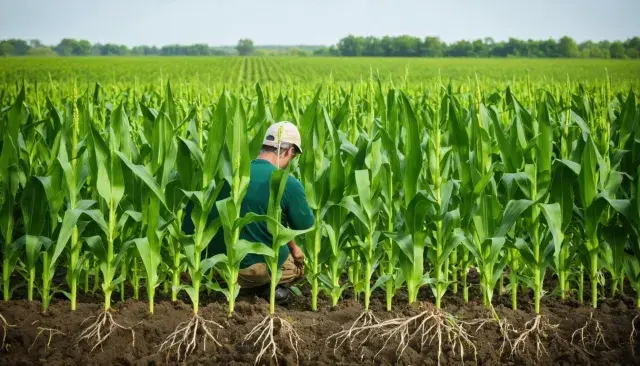
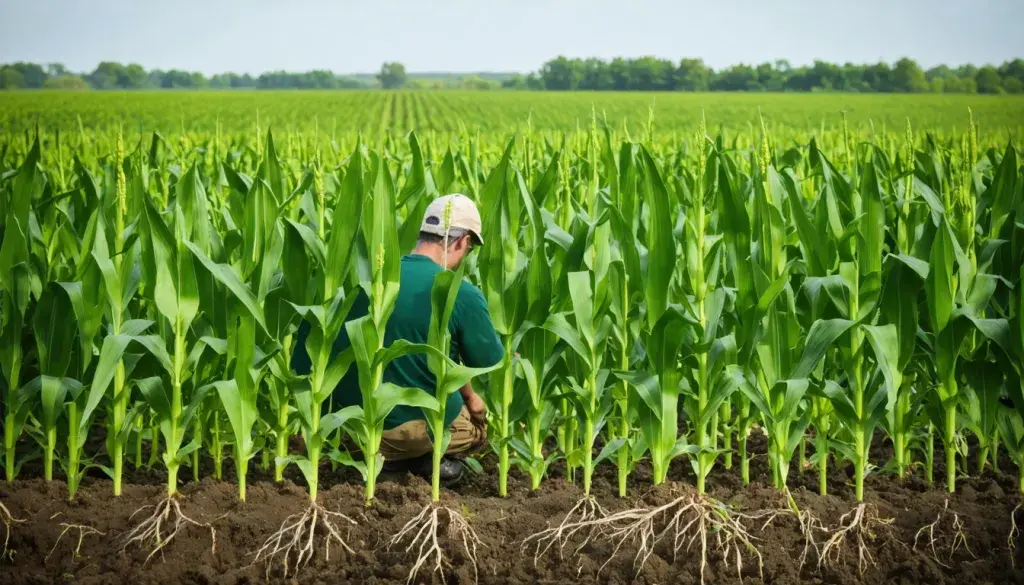
Healthy brace roots, which anchor plants and aid late-season uptake, remain green, smooth, and firm. Stress hits extremities first, causing brace roots to blanch, crease lengthwise, and collapse under pressure—signs preceding stalk failure. Kneeling to inspect them now guides harvest priorities, protecting combines from downed corn and avoiding yield losses.