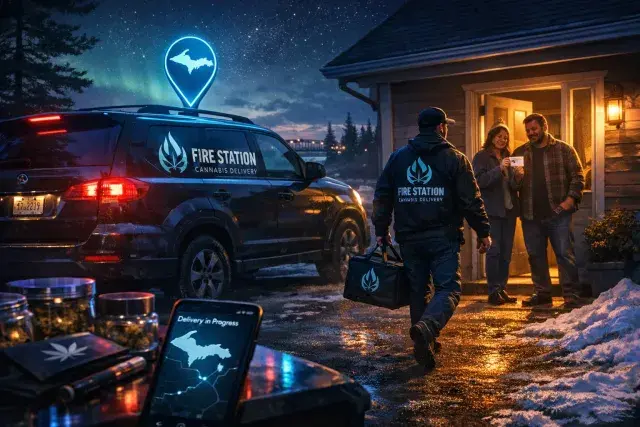
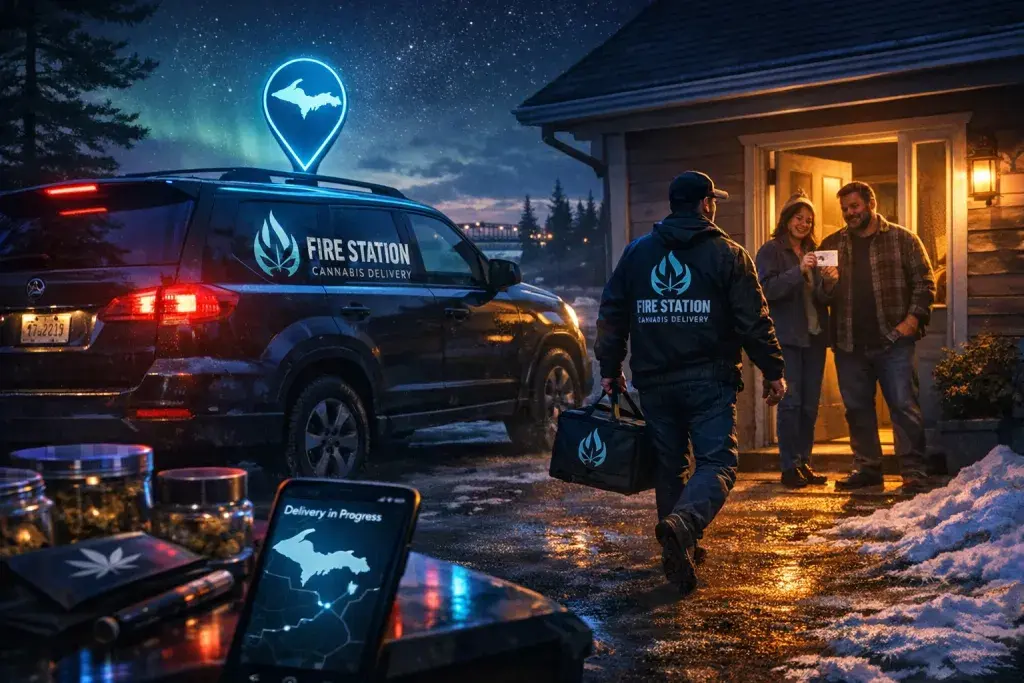
Fire Station Cannabis Co. in Marquette will soon deliver marijuana products to customers throughout Michigan's Upper Peninsula. The service targets medical patients and adults 21 and older, with ID verification required at residential addresses. Owner Stosh Wasik aims to address long travel distances in the remote region, enhancing access for those far from stores.
Service Details and Restrictions
Deliveries cover every city in the Upper Peninsula, scheduled one day per week per zone, with potential expansion if demand grows. Each order caps at 2.5 ounces per customer, aligning with Michigan's recreational marijuana purchase limits for adults. Customers must provide proof of age upon arrival, and products go only to homes, not businesses or public spaces.
Wasik emphasized convenience as the driving force. Customers have requested service beyond the store's current local zone, he said, noting that many drive long distances across the U.P. to buy Fire Station products. Accessibility stands as the top priority, he added, with the goal of simplifying product access.
Context in Michigan's Cannabis Landscape
Michigan legalized recreational marijuana in 2018 through voter-approved Proposal 1, which also expanded medical access. Dispensaries like Fire Station operate under strict state regulations from the Cannabis Regulatory Agency, which enforces purchase limits, testing standards, and delivery protocols to ensure safety and compliance. Delivery services remain a growing segment, permitted since 2021 with rules mandating secure transport and age checks.
In rural areas like the Upper Peninsula, where population centers are sparse and distances vast, such expansions fill practical gaps. Traditional retail requires trips that can span hours over poor roads, especially in winter. This model mirrors trends in other states, where delivery boosts equity by reaching isolated communities without compromising oversight.
Implications for Consumers and the Market
For Upper Peninsula residents, the service promises reduced barriers to regulated products, potentially curbing unregulated purchases. It supports public health goals by channeling sales through licensed providers that lab-test for contaminants and potency. Yet, weekly scheduling may limit immediacy, and high demand could strain capacity.
Broader adoption of delivery reflects cannabis normalization post-legalization, shifting from stigma-driven prohibition to regulated commerce. Businesses like Fire Station invest in logistics to compete, fostering economic growth in tourism-dependent regions. As services scale, regulators monitor for issues like overconsumption or youth access, maintaining balance between convenience and responsibility.