In Menominee, Michigan, the rapid expansion of marijuana dispensaries is transforming a key intersection into a congestion hotspot, raising alarms from local leaders about public safety and youth exposure just across the river from cannabis-dry Marinette, Wisconsin. This border dynamic underscores growing tensions in communities navigating legalization's uneven rollout.
The Twin Cities' Marijuana Divide
Marinette, Wisconsin, and Menominee, Michigan, share deep cultural and economic ties, often blending into a single metro area across the Menominee River. Yet Wisconsin's strict cannabis ban contrasts sharply with Michigan's 2018 legalization of medical and recreational marijuana, funneling demand northward. This disparity has fueled Menominee's dispensary surge, with eight shops now operating or planned, including recent openings like Elevated Exotics and The Fire Station's expanded drive-thru.
Traffic Congestion and Sensitive Locations
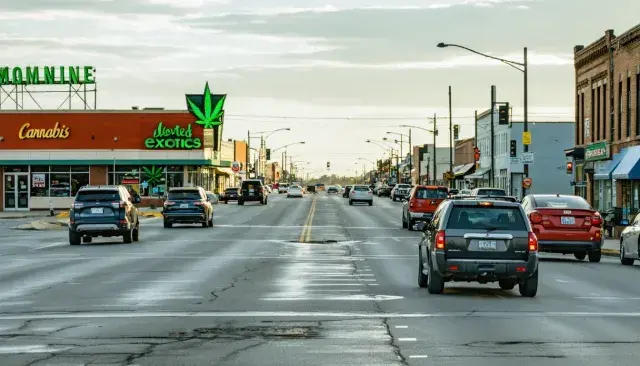
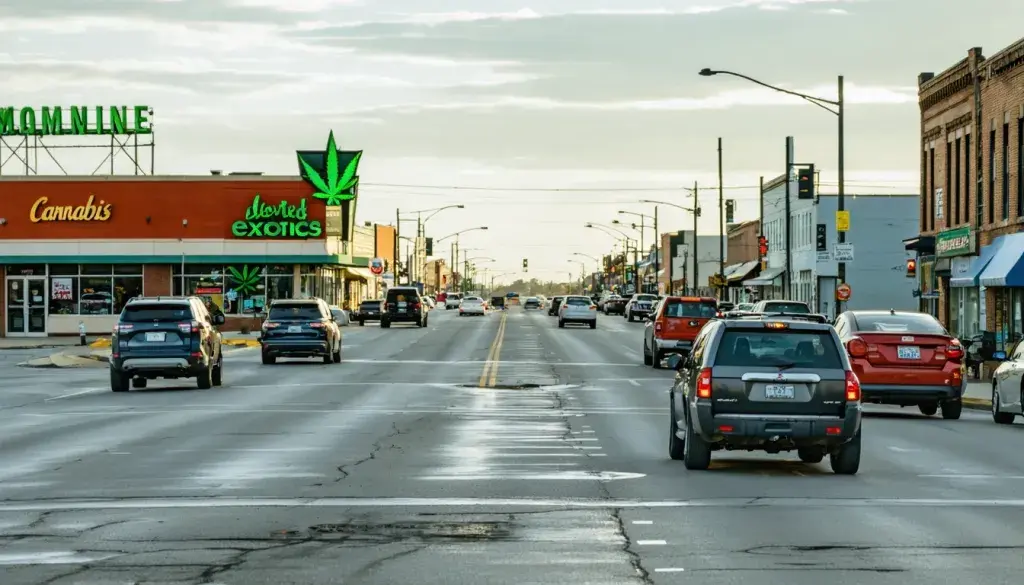
The epicenter of concern lies at 10th Avenue and 10th Street, one of the Upper Peninsula's busiest intersections. A new dispensary at the southwest corner threatens gridlock, prompting City Council member Michael DeDamos to question alley rerouting amid poor road conditions. Mayor Casey Hoffman amplifies risks, noting the site's proximity to a church, DAR Boys & Girls Club, and an elementary school walking path.
- Potential for increased vehicle and foot traffic near children
- Public safety hazards from inadequate infrastructure
- "Bad look" for community values, per Hoffman
Market Saturation Meets Economic Gains
Menominee's cannabis sector shows no signs of slowing, despite saturation fears. Owner Nilsson Davis of Elevated Exotics views the market as "flush and growing," though he worries about out-of-state operators prioritizing profits over community. The city scrapped its two-shop cap after legal battles, netting $400,000 in 2024 taxes. Hoffman predicts ongoing influx until zoning curbs proliferation or Wisconsin legalizes, potentially easing cross-border draw.
Implications for Community Health and Safety
This boom reflects broader U.S. trends where cannabis normalization boosts local revenue—Michigan collected over $400 million statewide in 2023—but amplifies public health challenges. Proximity to youth hubs risks normalizing use among impressionable ages, while traffic spikes echo issues in other border markets like Illinois post-legalization. Stricter zoning could mitigate nuisances, fostering sustainable growth that balances economic perks with protecting vulnerable populations and maintaining neighborhood integrity.