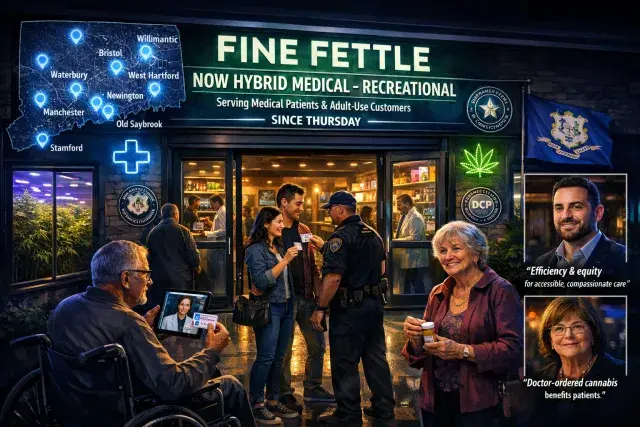
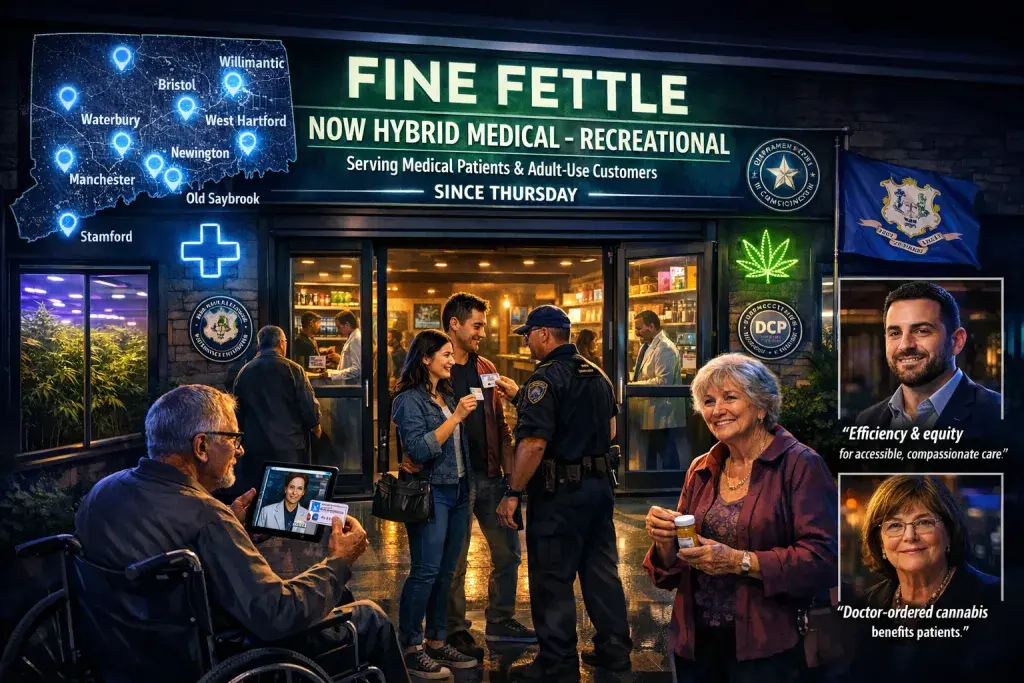
In Willimantic and across Connecticut, Fine Fettle is transforming its nine cannabis dispensaries into hybrid operations starting Thursday, blending recreational sales with expanded medical access under a new state law. This shift promises greater equity for medical patients, reducing travel burdens and enhancing care options in a maturing cannabis market.
Key Details of the Expansion
Fine Fettle, a prominent cannabis dispensary chain, operates locations in Willimantic, Bristol, Waterbury, West Hartford, Newington, Manchester, Old Saybrook, Norwalk, and Stamford. The Willimantic site, which opened in January 2023, was among the first nine approved for adult-use sales in Connecticut. Now, all sites will serve registered medical marijuana patients alongside recreational customers, enabled by recent legislation from the Department of Consumer Protection (DCP).
- Conversion effective Thursday, aligning with state regulations.
- Offers remote and in-person consultations with licensed pharmacists at every location.
- Maintains high standards of quality, expertise, and personalized service.
Connecticut's Evolving Cannabis Framework
Connecticut's cannabis landscape has rapidly advanced since recreational legalization in 2021. Prior to local openings like Willimantic's, residents often traveled out-of-state for access. The new hybrid law addresses gaps where medical patients faced limited options, allowing retailers to dual-license efficiently. This builds on the state's medical program, launched in 2012, which has grown to serve thousands amid rising demand for condition-specific treatments like chronic pain and epilepsy.
Implications for Patient Access and Public Health
Benjamin Zachs, Fine Fettle's COO, emphasized the move's focus on "efficiency and equity," noting patients shouldn't endure long travels or sparse choices. "This change allows us to continue fulfilling our mission of accessible, compassionate care," Zachs said, thanking legislators and DCP. State Rep. Susan Johnson highlighted benefits for those needing doctor-ordered cannabis, potentially improving outcomes for medical conditions.
Hybrid models nationwide, seen in states like Colorado and California, boost operational efficiency by 20-30% while prioritizing medical priority access—reducing wait times and costs. In Connecticut, this could enhance affordability and education, countering recreational market dominance and fostering a balanced ecosystem that prioritizes well-being over volume sales. As cannabis integrates into health trends, such expansions signal a shift toward inclusive, regulated access amid growing acceptance of its therapeutic roles.