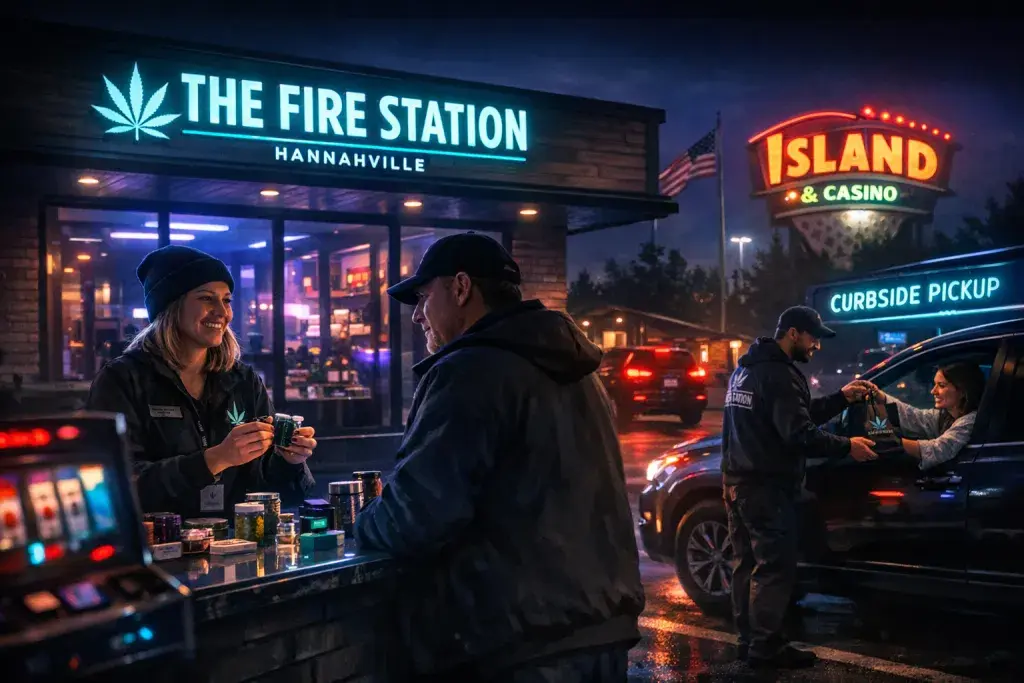
The Fire Station, Michigan's Upper Peninsula pioneer in recreational cannabis sales, opens its fourth location in Hannahville, adjacent to the Island Resort and Casino. This expansion brings the chain's offerings to Menominee County, where general manager Marsha Moffett expresses enthusiasm for sharing expertise with locals and travelers. The grand opening occurred this past Wednesday, complete with curbside pickup to ease access.
Pioneering Presence in the Upper Peninsula
The Fire Station claims distinction as the region's first recreational cannabis dispensary, a milestone tied to Michigan's 2018 voter approval of adult-use marijuana through Proposal 1. That measure legalized possession and sales for those 21 and older, prompting a wave of licensed retailers across the state. Starting in Negaunee, the chain grew to Marquette and Houghton before reaching Hannahville, reflecting steady demand in this rural northern expanse where dispensaries remain scarce compared to southern Michigan hubs.
Rapid Setup and Diverse Product Array
Moffett described the Hannahville team's swift preparations: stocking shelves with flower, pre-rolls, gummies, chocolate bars, brownies, tinctures, drink enhancers, vape cartridges, and concentrates. This broad selection caters to varied preferences, from traditional smoking to infused edibles that deliver controlled doses. Curbside pickup adds convenience, allowing customers to order remotely and collect without entering, a service that aligns with post-pandemic retail adaptations and Michigan's regulatory allowances for licensed operations.
Community Ties and Broader Cannabis Trends
Moffett emphasized building relationships with the Hannahville community, signaling intent to integrate beyond mere transactions. Michigan's cannabis market has matured since legalization, generating over $3 billion in total sales by mid-2024 according to state reports, with the Upper Peninsula capturing a niche share amid tourism draws like casinos and resorts. This location's proximity to the Island Resort positions it to serve visitors, potentially boosting local economy while navigating federal restrictions that still classify marijuana as a Schedule I substance. As recreational use normalizes, such outlets contribute to shifting perceptions, though public health experts stress moderation to mitigate risks like impaired driving or youth access.