Running a cannabis dispensary without purpose-built technology is a bit like running a pharmacy without a prescription management system - technically possible, but increasingly untenable as regulations tighten and customer expectations rise. The cannabis retail industry operates under a compliance burden that most retail sectors never face: real-time inventory reporting to state regulators, strict purchase limits per customer, age verification requirements, and detailed audit trails for every transaction. A single reporting error can trigger a license review. A stockout during peak hours can send customers to a competitor permanently.
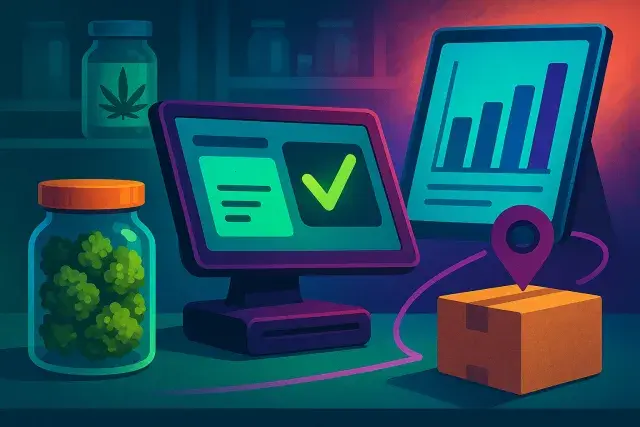
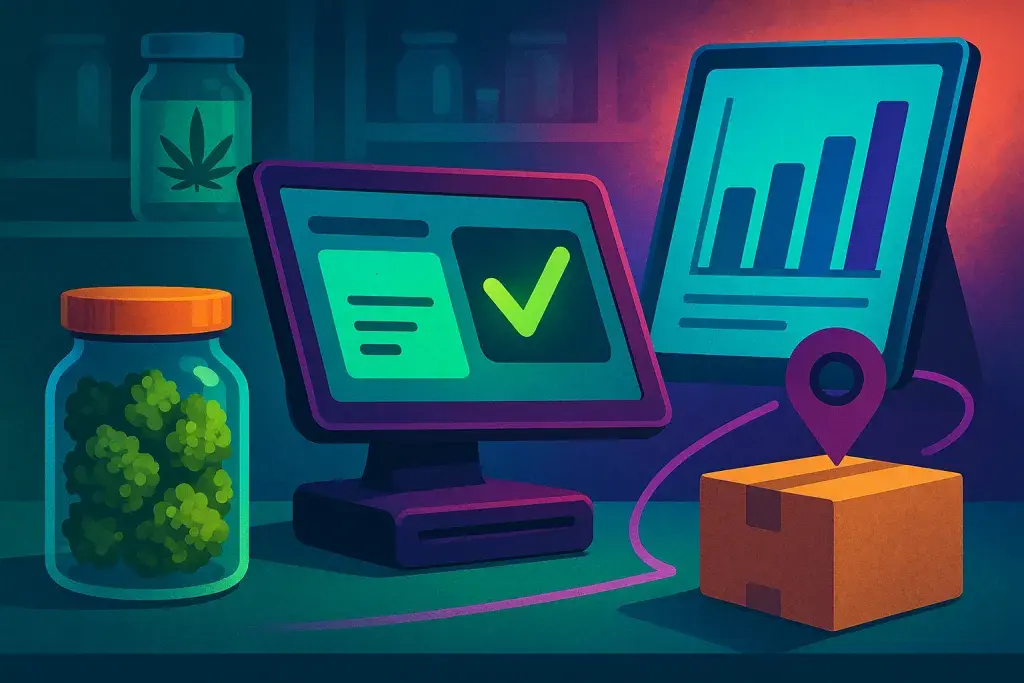
This is why cannabis businesses have moved aggressively toward integrated technology stacks that combine point-of-sale systems, inventory management, and delivery logistics under one operational roof. Modern cannabis sales software does far more than process transactions - it connects the front counter to the back office to the regulatory portal in real time, reducing human error and freeing staff to focus on customer experience rather than paperwork.
This article walks through how each component of that technology stack works, what it solves, and how dispensary operators can evaluate and implement these tools effectively. Whether you manage a single storefront or a multi-location operation expanding into delivery, the underlying principles apply consistently across the industry.
Understanding the Core Challenges of Cannabis Retail Management
Why Cannabis Retail Is Operationally Different from Conventional Retail
Cannabis dispensaries face a dual mandate that most retailers do not: serve customers efficiently while simultaneously functioning as a compliance node in a state-regulated supply chain. Every product that enters the store, sits on the shelf, and leaves through a sale must be accounted for in a way that satisfies both business operations and regulatory oversight. This creates a layered operational environment where standard retail software falls short almost immediately.
In most states, cannabis businesses must report inventory movements to a seed-to-sale tracking system - commonly platforms like Metrc or BioTrack. This means dispensary staff cannot simply scan a product and move on. Each transaction must generate a compliant record that maps to state-issued plant tags and lot identifiers. Cannabis retail management, done properly, requires technology that bridges the commercial and regulatory dimensions simultaneously.
The Consequences of Manual Processes
Dispensaries that rely on spreadsheets or disconnected systems to manage stock run a predictable set of risks. Inventory discrepancies accumulate over time because manual entry introduces errors at every touchpoint - receiving, transfers, adjustments, and sales. When auditors request reconciliation reports, those errors become liabilities.
Beyond compliance, manual processes slow down the customer experience. A budtender who cannot instantly see current stock levels, product potency data, or purchase history is less effective at making recommendations. Long wait times at the point of sale - caused by slow lookups or system workarounds - directly affect customer retention. Technology adoption in this space is not about preference; it is about operational survival.
Setting Realistic Expectations for Technology Solutions
No single platform eliminates all operational friction. Cannabis technology vendors often overstate the ease of implementation. A marijuana dispensary POS system requires proper staff training, clean initial data entry, and ongoing maintenance to deliver its promised value. Operators who treat software as a plug-and-play fix typically underperform compared to those who invest in onboarding and process design alongside the technology itself.
The right framing is this: good software creates the conditions for better decisions and fewer errors. It does not make decisions for you, and it does not compensate for poorly designed workflows. Understanding this distinction prevents disappointment and helps operators extract genuine value from their investments.
How Marijuana Dispensary POS Systems Work
Core Functions of a Dispensary Point-of-Sale System
A marijuana dispensary POS system handles more than payment processing. At its foundation, it manages the entire transaction workflow: customer check-in, ID verification, product lookup, purchase limit enforcement, payment processing, and receipt generation. Each of these steps has compliance implications that general retail POS systems are not designed to address.
Customer check-in in a compliant dispensary typically involves scanning a government-issued ID to verify age and, in medical states, validate a patient registry number. This data feeds into the POS so that purchase limits - whether measured in grams, milligrams of THC, or equivalent units - are tracked and enforced at the point of sale rather than left to individual staff judgment. When a customer reaches their daily or period limit, the system flags the transaction before it completes.
Integration with State Tracking Systems
One of the most operationally significant features of a well-built marijuana dispensary POS is its direct integration with state seed-to-sale platforms. Rather than requiring staff to manually log sales into a state portal after each transaction, compliant POS systems push that data automatically upon sale completion. This real-time reporting reduces both the administrative burden and the risk of discrepancies between internal records and state records.
The integration works in both directions. When new inventory arrives with state-issued tags, those tags are received into the POS system and automatically reconciled against the state system's records. Any mismatch triggers an alert before the product reaches the sales floor, catching errors at the point of entry rather than during an audit weeks later.
Customer Experience Features Built Into Modern POS
Beyond compliance mechanics, modern POS systems for dispensaries include features that directly shape the customer experience. Loyalty program management, customer purchase history, product preference tracking, and upsell prompts are all built into leading platforms. A budtender who can quickly pull up a returning customer's purchase history - knowing their preferred strain type, typical budget, and past reactions to certain products - provides a materially better consultation than one working from memory alone.
Some systems also support digital menus and kiosk integrations that allow customers to browse available products and build their order before reaching the counter. This reduces transaction time, particularly during peak hours, without requiring additional staff.
Dispensary Inventory Software: Controlling Stock from Seed to Sale
What Dispensary Inventory Software Actually Tracks
Dispensary inventory software manages the movement of cannabis products through every stage of the retail operation: receiving from licensed suppliers, storage in the vault, transfer to the sales floor, adjustments for waste or damage, and depletion through sales. Each movement generates a record that contributes to the overall inventory picture the system maintains in real time.
The granularity of that tracking matters significantly. Effective dispensary inventory software tracks products not just by SKU or category but by lot, batch, and package ID - the identifiers that connect each unit on the shelf to its origin in the supply chain. This level of detail is what makes regulatory reconciliation possible and what enables precise first-in-first-out (FIFO) inventory management to prevent product expiration.
Automated Reorder and Demand Forecasting
One underused capability of mature inventory platforms is automated reorder triggering. When stock of a particular product falls below a defined threshold, the system generates a purchase order or alert without requiring a manager to notice the gap manually. For high-velocity products - certain vape cartridges or edibles in particular - stockouts can happen quickly, especially during promotional periods or holidays.
Some platforms layer demand forecasting on top of basic reorder alerts. By analyzing historical sales velocity, day-of-week patterns, and seasonal trends, the software can recommend order quantities that reduce both stockouts and overstock. Carrying excess inventory ties up capital and, for products with expiration windows, creates waste. Better forecasting directly improves margin.
Handling Multi-Location Inventory
For operators running more than one dispensary location, centralized inventory visibility is essential. Multi-location cannabis retail management requires a platform that consolidates stock levels across all stores into a single dashboard while maintaining location-specific compliance records. Transferring product between locations - which is a regulated activity in most states - should be manageable directly within the software, with the appropriate transfer manifests generated automatically.
Centralized purchasing also becomes possible when inventory data flows from all locations into one system. A buyer can see aggregate demand patterns across the business and negotiate supplier relationships based on total volume rather than location-by-location purchasing. This operational leverage compounds as businesses scale.
Cannabis Compliance Tracking: Staying Ahead of Regulatory Requirements
The Regulatory Landscape Cannabis Businesses Operate In
Cannabis compliance tracking is not a static requirement - it evolves as state legislatures amend cannabis laws, as regulators update reporting formats, and as businesses expand into new jurisdictions with their own rule sets. A dispensary operating in multiple states may need to comply with fundamentally different reporting requirements depending on location, all simultaneously.
State seed-to-sale systems serve as the backbone of compliance tracking at the regulatory level, but dispensaries must maintain their own internal compliance records as well. These include employee training logs, security system maintenance records, transport manifests, waste disposal documentation, and customer transaction records - each with its own retention period and format requirement. Managing this across manual systems is not only inefficient but creates gaps that become visible during inspections.
How Software Automates Compliance Workflows
Purpose-built cannabis compliance tracking software reduces the manual burden of regulatory adherence by automating the generation and submission of required reports. When a sale is completed through a compliant POS, the transaction data is formatted to meet state reporting standards and pushed to the relevant regulatory system without additional staff intervention. Similarly, when inventory is adjusted - for waste, sampling, or damage - those adjustments are recorded in the format required by state auditors.
Alert systems within compliance-focused platforms notify managers when deadlines are approaching, when discrepancies exceed defined thresholds, or when new regulatory updates require action. This proactive architecture prevents the reactive scrambling that characterizes compliance management in dispensaries running on disconnected systems.
Audit Preparation and Record Keeping
Regulatory audits in cannabis require dispensaries to produce precise records on short notice. The ability to quickly generate a complete transaction history for a specific date range, reconcile on-hand inventory against state records, or produce a chain-of-custody report for a specific batch is only possible when the underlying data is clean, complete, and searchable.
Dispensary inventory software that maintains immutable transaction logs - records that cannot be altered after the fact - provides the evidentiary foundation that audits require. Some platforms offer dedicated audit preparation modes that compile the most commonly requested report types into a ready-to-export format, significantly reducing the time and stress associated with regulatory inspections.
Weed Delivery Software: Managing Cannabis Commerce Beyond the Storefront
The Compliance Complexity of Cannabis Delivery
Cannabis delivery introduces a new layer of compliance requirements on top of those governing in-store retail. Delivery operations must manage customer verification at the point of delivery - not just at the point of order - track the physical location of drivers carrying product, maintain manifests for products in transit, and ensure that deliveries do not cross into jurisdictions where cannabis delivery is not permitted.
Weed delivery software is purpose-built to handle these requirements. It integrates with the dispensary's POS and inventory systems to create a complete order-to-delivery workflow where compliance checkpoints are embedded at each stage rather than added as afterthoughts. A delivery that leaves the dispensary generates an automatic transfer manifest in the state system. A driver who cannot verify a customer's ID at the door can flag the delivery as incomplete directly in the app, triggering a return-to-store protocol that keeps the inventory records accurate.
Route Optimization and Driver Management
Operational efficiency in cannabis delivery depends heavily on how effectively the software manages driver dispatch and route planning. Basic weed delivery software assigns orders to drivers and provides navigation. More advanced platforms optimize multi-stop routes dynamically, factoring in order timing windows, traffic conditions, and driver locations to minimize delivery times without requiring a dispatcher to manage each assignment manually.
Driver management features - including shift tracking, performance metrics, and mobile communication tools - allow delivery managers to oversee their fleet without requiring constant check-ins. When something goes wrong with a delivery, the system provides the transaction record, GPS timestamp, and driver log needed to resolve customer disputes or regulatory inquiries.
Customer-Facing Delivery Experience
On the customer side, effective weed delivery software mirrors the expectations set by mainstream delivery platforms: real-time order tracking, estimated arrival windows, and delivery confirmation notifications. Cannabis customers have the same expectations for convenience and transparency as they do when ordering food or consumer goods. Platforms that fall short on the customer experience side - slow order confirmation, no tracking visibility, unreliable ETA estimates - generate complaints that affect the dispensary's broader reputation.
Order management features within the delivery software should also connect back to the dispensary's inventory in real time. If a product sells out after a customer has placed a delivery order, the system should flag the substitution need immediately rather than allowing the driver to arrive with an incomplete order. Clean integration between the delivery platform and the dispensary's core inventory system prevents this category of operational failure.
Integrating POS, Inventory, and Delivery Into a Unified Cannabis Retail Stack
Why Integration Matters More Than Individual Features
A dispensary operating separate, disconnected systems for POS, inventory, and delivery will inevitably experience data inconsistencies. If the POS does not communicate inventory depletion to the delivery platform in real time, overselling becomes likely. If compliance reporting draws from a different database than the POS transaction log, reconciliation errors accumulate. The individual capabilities of each system matter less than how cleanly they work together.
When evaluating cannabis technology vendors, integration architecture deserves as much scrutiny as feature lists. Open API access - which allows systems to exchange data programmatically - is a reliable signal that a platform is designed for interoperability. Closed systems that do not communicate with third-party tools force operators into all-or-nothing vendor relationships that limit flexibility as the business evolves.
Evaluating Vendors for Cannabis Retail Management
Choosing the right technology stack for cannabis retail management involves several practical criteria beyond the feature comparison:
- State compliance coverage: Does the platform support the specific seed-to-sale system your state uses?
- Update frequency: How quickly does the vendor push compliance updates when state regulations change?
- Support quality: Cannabis retail does not operate on a nine-to-five schedule - does the vendor offer after-hours support?
- Data portability: Can you export your historical data if you switch vendors?
- Hardware compatibility: Does the POS system require proprietary hardware, or does it work with standard retail equipment?
Speaking with other dispensary operators who use a platform in real-world conditions provides insights that vendor demos rarely surface. The gap between a polished sales demonstration and day-to-day operational performance can be significant.
Implementation and Staff Training
Technology adoption fails most often during implementation. Dispensary staff who are not trained adequately on a new marijuana dispensary POS system revert to workarounds that undermine the system's compliance and reporting functions. Budtenders who skip verification steps because the interface is confusing create liability exposure. Inventory staff who manually adjust records outside the system's official workflow introduce the discrepancies the software was installed to prevent.
Effective implementation plans include phased rollouts - starting with one location or function before expanding - along with role-specific training materials, a defined go-live support period from the vendor, and post-launch audits to catch workflow gaps before they become compliance issues. The cost of a thorough implementation process is modest compared to the cost of a failed deployment or a regulatory penalty caused by data errors during the transition.
Frequently Asked Questions
Can a standard retail POS system work for a cannabis dispensary if we add compliance tracking manually?
It can work in the short term, but the manual overhead is substantial and the error risk is significant. Standard retail POS systems do not enforce purchase limits, do not integrate with state seed-to-sale platforms, and do not generate the specific report formats regulators require. As compliance demands increase - and they consistently do as the industry matures - manual workarounds become progressively harder to maintain without errors.
How do dispensary inventory software systems handle product returns or damaged goods?
Purpose-built dispensary inventory software includes specific adjustment workflows for returns, waste, and damage that generate the required regulatory records automatically. Returns in cannabis are heavily regulated - most states prohibit returning product to the sales floor - so the system typically routes returned product to a quarantine category pending destruction or disposal documentation. Each step generates an audit trail that satisfies state requirements.
What happens to delivery orders when a customer fails ID verification at the door?
Compliant weed delivery software includes a failed verification protocol: the driver marks the delivery as unverifiable in the app, the product is returned to inventory through a documented reversal process, and the transaction is voided or held pending resolution. The state manifest is updated to reflect the return. Customers who fail verification are typically flagged in the system to prevent re-ordering without resolution of the issue.
How often do state compliance reporting requirements change, and how do software vendors keep up?
Regulatory changes vary by state and can occur multiple times per year, particularly in states where cannabis laws are still being refined. Reputable cannabis technology vendors maintain dedicated compliance teams that monitor regulatory updates and push system updates before deadlines. When evaluating a vendor, asking specifically about their compliance update history and average time-to-update after a regulatory change is a practical due diligence step.
Is it possible to run cannabis delivery as a standalone operation without a connected dispensary POS?
Some jurisdictions permit delivery-only cannabis businesses - often called non-storefront retailers - that operate without a physical retail location. In those cases, the delivery software functions as the primary POS and inventory management system combined. The compliance requirements are the same as for storefront dispensaries, and the software stack must still integrate with the state tracking system, enforce purchase limits, and maintain complete transaction records.
What is the typical timeline for implementing a new marijuana dispensary POS system?
A single-location implementation typically takes between two and six weeks from contract signing to full go-live, depending on data migration complexity, hardware setup, and staff training requirements. Multi-location rollouts take proportionally longer. Operators who migrate from an existing platform need additional time to export and clean historical data. Rushing the implementation timeline to meet an arbitrary launch date is one of the most common causes of post-launch operational problems.