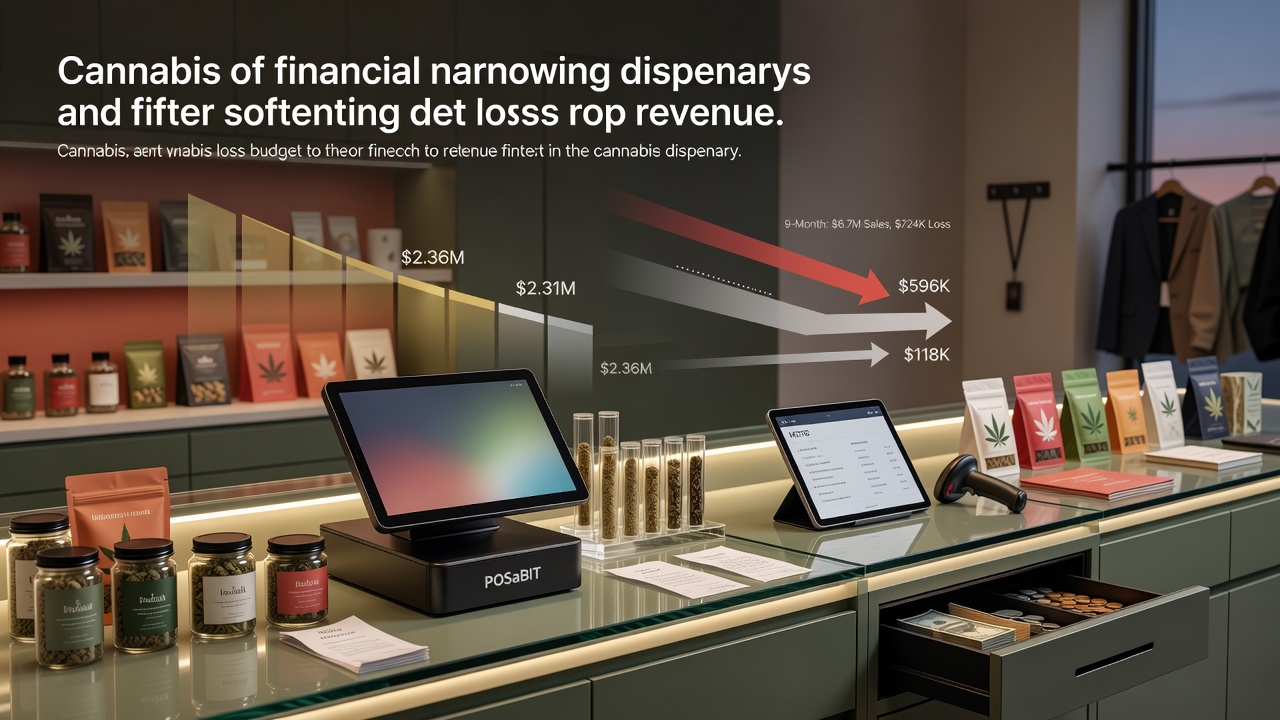
POSaBIT Systems Corporation posted third-quarter 2026 results showing sales of $2.31 million, down from $2.36 million a year earlier, while narrowing its net loss to roughly $118,000 from $596,000 in the same period last year. For the nine months ended September 30, 2026, sales came in at $6.7 million versus $7.86 million a year prior, with net loss improving to about $724,000 from $1.09 million. The numbers tell a familiar story in cannabis fintech right now: top-line pressure, but tighter cost discipline underneath.
What the revenue dip actually signals
A decline in sales for a company built around point-of-sale systems and cashless payment processing for dispensaries usually points to one of two things - fewer retail clients transacting through the platform, or softer transaction volume at existing client locations. Either explanation lines up with what multi-state operators and single-location dispensaries alike have been describing all year: thinner basket sizes, cautious consumer spending, and continued wholesale pricing compression that squeezes margin at every link in the supply chain. POSaBIT's business model sits downstream of dispensary foot traffic, so when budroom sales slow, so does the company's processing revenue. That's not a knock on the platform itself; it's just how the math works in a payments business tied to retail velocity.
Why the narrower loss matters more than the softer sales
Here's the catch worth sitting with: a shrinking top line paired with a meaningfully smaller net loss is actually the more interesting data point. Cutting net loss by roughly 80 percent year-over-year on a quarter with lower sales suggests real operating expense discipline - fewer dollars spent to process fewer transactions, in simple terms. For a cannabis-adjacent fintech vendor, that kind of cost control matters because the sector's unit economics are already strained by 280E tax treatment on the retail side and by the general unwillingness of traditional banks to touch cannabis-related payment rails. Vendors serving licensed dispensaries don't get the luxury of easy credit lines or conventional merchant services; they build workarounds, and workarounds cost money to maintain. Trimming losses while sales soften is a sign of a company tightening operations rather than simply riding growth.
What this means for dispensary operators and compliance teams
For store owners and operations managers, the relevant question isn't POSaBIT's income statement in isolation - it's platform stability. Dispensaries rely on point-of-sale and payment vendors to stay synced with seed-to-sale tracking systems like METRC, to generate accurate compliance logs, and to keep cashless payment options running without interruption at the register. A vendor managing its losses carefully, even amid a softer sales quarter, is generally a safer long-term partner than one burning cash to chase growth. Operators evaluating point-of-sale contracts should still ask basic due-diligence questions: How is the vendor's compliance reporting handled across state lines? What happens to transaction data and inventory records if the vendor changes pricing or exits a market? Cannabis retail remains a cash-intensive, highly regulated channel, and the payment and POS layer is not a place where operators want surprises.
The broader picture for cannabis retail technology
POSaBIT's results fit a pattern playing out across cannabis retail technology and payments more broadly - modest or declining revenue growth paired with sharper cost management, as companies in this space adjust to a market that's matured past its early expansion phase but still lacks full federal banking access. Wholesale pricing pressure, slower adult-use sales growth in several mature state markets, and continued compliance overhead tied to excise tax collection and reporting all weigh on the retailers that are POSaBIT's customer base. In practice, though, a smaller loss on lower revenue is not a crisis signal. It's closer to an operator-style response: hold the line on spending until the sales environment stabilizes. Whether that's a durable strategy or a temporary adjustment will become clearer over the next several reporting periods.