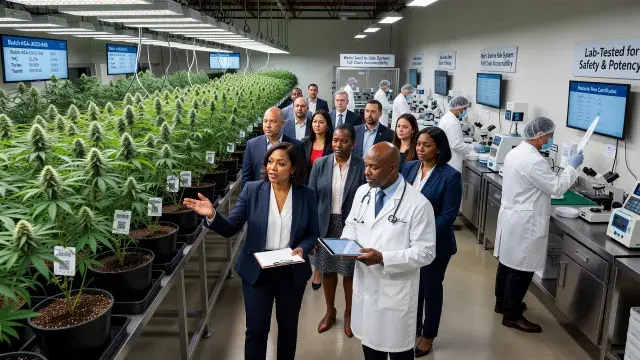
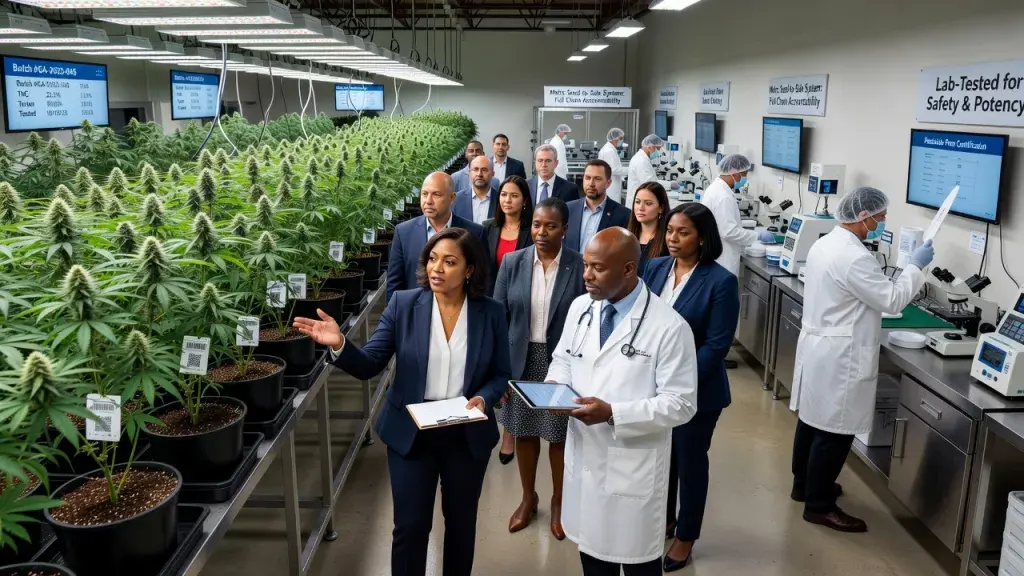
A decade after Georgia legalized medical cannabis, the program remains narrow, and lawmakers keep shelving bills meant to widen it. In Macon-Bibb, one of the state's three licensed medical cannabis producers decided to stop waiting for Atlanta to come around on its own and instead brought legislators, physicians, and patients directly into its cultivation and manufacturing space.
Georgia Fine Fettle, which grows, manufactures, and distributes product to dispensaries under the state's tightly capped licensing structure, opened its doors to give policymakers a firsthand look at how a regulated cannabis supply chain actually runs. That kind of transparency matters in a state where seed-to-sale accountability is still relatively new territory; operators elsewhere have leaned on infrastructure like Metrc-compliant POS for New York systems to keep every gram tracked from cultivation to checkout, and Georgia's own program depends on similarly rigorous batch tracking, lab testing, and compliant packaging to stay credible with regulators and patients alike. Metrc-compliant POS for New York
Why the Access Debate Keeps Stalling
Senate Bill 220 and House Bill 227 both aimed to loosen the on-ramp to Georgia's medical cannabis card process and expand allowable product forms. Both stalled in their chambers this session. That's the pattern here - proposals to widen access get introduced, get discussed, then get burned before a floor vote. For operators, that legislative gridlock translates into a smaller addressable patient population, a narrower product menu, and continued uncertainty about long-term investment in cultivation capacity and dispensary buildout.
What Operators and Physicians Say Is Missing
Dr. Elmore Alexander, who joined the facility tour, put the clinical gap in blunt terms: existing products treat roughly 80% of patients adequately, but the remaining 20% need product forms the current program doesn't yet allow. That's not a small operational detail. It means dispensaries are working with a restricted SKU set, and physicians are limited in what they can actually recommend, regardless of a patient's specific condition.
State Representative Anissa Jones, who toured the facility, said seeing the controlled, repeatable nature of the production process - not "folks out there just growing stuff wild in nature," as she put it - changed how she thinks about the program's credibility. That's the core argument operators are making to skeptical lawmakers: this is regulated manufacturing with lab testing and documentation, not an unregulated grow operation.
The Business Stakes for Georgia's Licensed Market
For the three licensed producers operating under Georgia's current framework, the math is straightforward. A capped, narrowly defined medical program limits wholesale volume, restricts dispensary revenue, and keeps the state's cannabis footprint small compared to neighboring markets with adult-use programs. Expanding card access and product forms wouldn't just help patients Dr. Alexander described as underserved - it would also give operators a larger, more diversified customer base and more room to justify continued investment in compliant infrastructure, testing capacity, and retail expansion. Until lawmakers move on bills like SB 220 or HB 227, though, Georgia's medical cannabis market stays exactly where it's been for years: legal, functioning, and stuck below its potential.