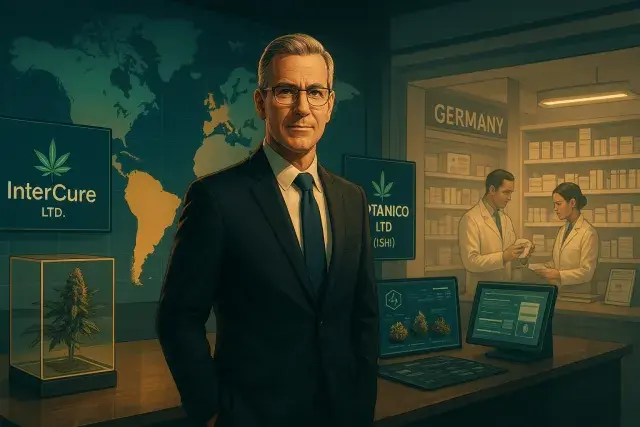

InterCure Ltd., the Nasdaq- and Tel Aviv-listed medical cannabis company, has closed the first tranche of its acquisition of Botanico Ltd. - known commercially as ISHI - an Israeli cannabis technology and brand firm that brings with it exclusive access to American genetics, proprietary strains, and strategic alliances with established U.S. operators. The deal signals something more than a routine portfolio addition: it positions InterCure to move, carefully, into regulated U.S. medical cannabis markets in the wake of federal rescheduling. That's a meaningful shift in the company's posture, and one worth watching closely.
The mechanics of the transaction are straightforward. InterCure will issue approximately 2.47 million ordinary shares at initial closing, with a nearly identical tranche to follow once conditions in the share purchase agreement are met. What's striking here is not the share structure itself - it's what Botanico actually delivers operationally. ISHI's portfolio includes AI-driven cultivation technologies, automated production systems, and a relationship with The Flowery, a well-regarded U.S. cannabis operator. For cannabis businesses already working with tools like cannabis pos software oregon-based operators use to manage compliance-heavy retail environments, the integration of AI and automation into upstream production represents the other end of the same efficiency conversation - one that's been playing out across the supply chain for years. Genetics and production technology, in this context, aren't just R&D assets; they're potential inputs into international product lines with documented provenance.
InterCure's U.S. ambitions are deliberately scoped. The company has stated, explicitly, that its evaluation of American opportunities is focused exclusively on regulated medical cannabis markets. That's not an accident. The federal rescheduling of certain state-licensed medical cannabis from Schedule I to Schedule III - still a developing regulatory situation with real compliance complexity ahead - opened a narrow but plausible door for internationally oriented operators who want exposure to the U.S. market without wading into adult-use territory, where federal risk remains higher. A medical-only approach reduces some of that exposure, though it doesn't eliminate the patchwork of state licensing requirements, product testing mandates, and compliance frameworks any entrant would need to satisfy.
Germany as a Proof of Concept for International Medical Expansion
While the Botanico deal draws most of the attention, the German piece of this story deserves equal scrutiny. InterCure reported its first meaningful revenues from Germany earlier this year - a market that has been steadily professionalizing its medical cannabis framework and attracting international suppliers. The company has since appointed a dedicated German management and sales team and expects multiple product launches in the second half of the year. That's an aggressive timeline, but Germany's pharmacy-distribution model - where licensed medical cannabis moves through regulated pharmacy channels rather than standalone dispensaries - suits a pharmaceutical-platform approach better than a traditional retail buildout would. InterCure is reading that structure correctly.
The broader logic of InterCure's strategy, as articulated by CEO and Chairman Alexander Rabinovitch, is vertical integration across regulated international markets - sourcing premium genetics and proprietary technology through deals like Botanico, then deploying those assets into compliant medical channels in Germany, and potentially the U.S., as regulatory windows open. That's a familiar playbook from other multi-jurisdictional cannabis operators, and it carries the same operational risks: execution across multiple regulatory regimes simultaneously, currency and licensing exposure, and the challenge of maintaining product consistency when production, testing, and distribution standards vary country by country.
What This Means for U.S. Operators Watching From the Sidelines
For American cannabis operators - especially those managing vertically integrated operations across multiple states - the InterCure-Botanico deal is a useful signal about where international capital is looking. Award-winning U.S. genetics and production know-how are increasingly being treated as exportable assets, not just domestic competitive advantages. The partnership with The Flowery, in particular, suggests that some established U.S. operators are actively exploring licensing or brand-alliance structures with international companies as a way to extend their intellectual property into markets where direct U.S. ownership isn't feasible.
In practice, though, the path from signed agreement to compliant product on a pharmacy shelf in Frankfurt or a licensed dispensary in a regulated U.S. state is long and operationally intensive. Regulatory approval timelines, laboratory testing and certificate-of-analysis requirements, and import or distribution licensing all create friction that acquisition announcements can obscure. InterCure is doing the right things - building the team, securing the genetics, structuring the partnerships - but the execution phase is where international cannabis expansion tends to get complicated. That's worth keeping in mind as the company's U.S. strategy takes shape over the months ahead.