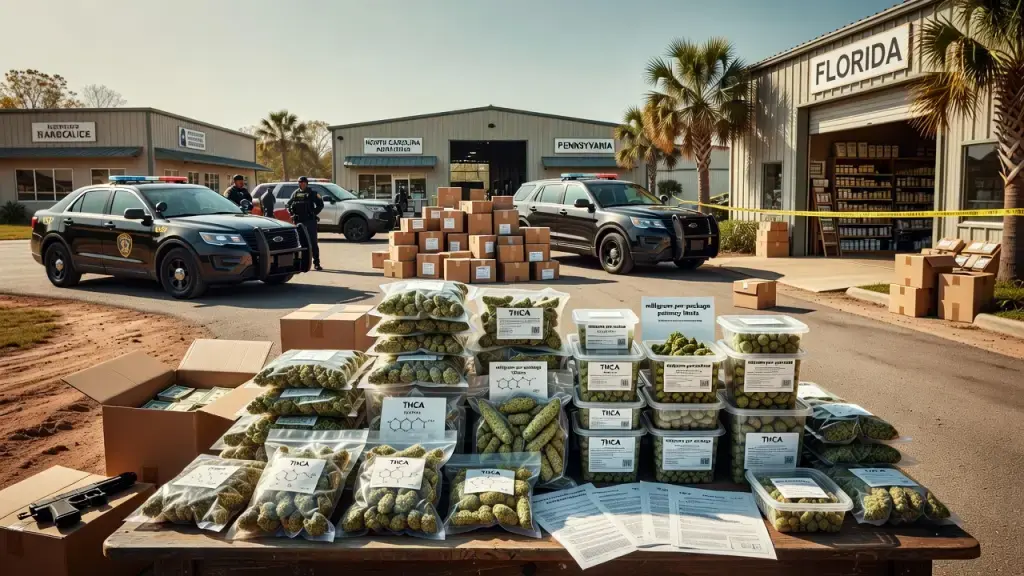
Six weeks before most hemp cannabinoid products become federally illegal, the enforcement wave is already here - and it isn't coming from Washington. A series of raids, arrests and multi-state investigations targeting hemp retailers suggests local police and state regulators, not the DEA or FDA, are setting the terms of the coming crackdown.
Why state law, not federal law, is driving the action
The federal agencies tasked with enforcing the new restrictions simply don't have the headcount for it. Attorneys who work with hemp operators say the FDA and DEA lack the resources to police intoxicating hemp products at scale, which leaves the real enforcement muscle sitting at the state and county level. That's a meaningful shift from the hemp boom's early years, when confusion between hemp and marijuana was common and local officers often couldn't tell a compliant THCA flower product from an illicit one. That knowledge gap has closed. County sheriffs and small-town police departments are now versed in cannabinoid chemistry in a way they weren't even two years ago, and states have passed potency caps, age-gating rules and testing mandates that give local law enforcement something concrete to enforce.
Virginia, Texas and Florida illustrate the range of approaches already in place - from milligram-per-package THC limits to outright bans on THCA flower. For operators, this means compliance can no longer be mapped against a single federal standard. It has to be built state by state, sometimes county by county, with product batches, labeling and lab testing documentation (COAs) held to whatever threshold the strictest nearby jurisdiction demands.
What the recent raids actually targeted
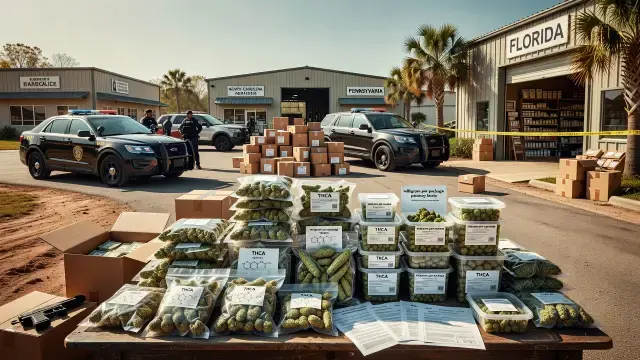
Look closely at the cases making headlines - a multi-county sting in Pennsylvania, raids on more than a dozen shops in North Carolina, a Florida warehouse network accused of shipping product across state lines - and a pattern emerges. These aren't actions against operators selling tested, labeled, state-compliant hemp goods. They involve allegations of money laundering, firearms violations or distribution of undisclosed-potency products, the kind of conduct that would draw scrutiny under any regulatory regime, hemp or otherwise.
That distinction matters for legitimate retailers. Operators maintaining compliant packaging, accurate lab testing records and age-restricted sales processes are operating in a different risk category than shops moving unregulated "THCA flower" with no testing paperwork behind it. Enforcement so far appears to be sorting sellers along exactly that line.
What this means for operators between now and Dec. 11
The emerging picture looks less like a federal sweep and more like the uneasy coexistence that's long defined state-licensed marijuana businesses operating under federal prohibition - survive if you follow state rules, and the odds of a knock on the door drop considerably. That's cold comfort to cannabis operators who've spent years lobbying for a federal crackdown on unregulated hemp competitors, but it's the pattern the data on the ground supports.
- Potency limits and age restrictions are now state-specific and enforceable with real penalties attached.
- THCA flower is already banned outright in several states, independent of what happens federally on Dec. 11.
- Federal charges so far have attached to other alleged crimes - firearms, money laundering, public corruption - rather than hemp sales alone.
- Compliance documentation, including COAs and accurate labeling, remains the clearest differentiator between operators facing scrutiny and those who aren't.
Hemp trade groups are still pushing for a legislative fix before the deadline hits. Whether or not that compromise materializes, the operational reality for dispensaries, wholesalers and hemp brands is the same: state law is where the enforcement risk actually lives, and it's not waiting for Congress to decide anything.