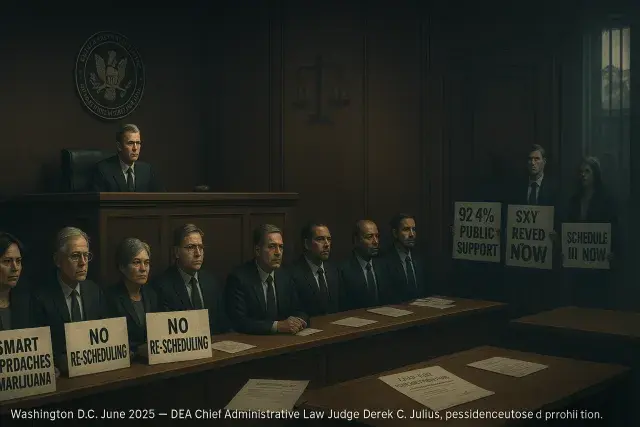
A formal administrative hearing on the Trump administration's marijuana rescheduling proposal opened this week, and the most direct congressional threat to the process - a funding rider that would bar federal officials from spending any money to reschedule cannabis - appears to lack the votes to survive. Lawmakers from both parties said they don't expect the provision to make it into enacted law. For licensed cannabis businesses, that's meaningful: the regulatory path toward Schedule III remains open, at least for now.
The provision in question cleared the House Appropriations Committee last month. Its language is blunt - it would prohibit any appropriated funds from being used to reschedule marijuana or remove it from the controlled substances schedules entirely. The Appropriations Committee has passed similar riders in prior years, and none of them have reached a president's desk. That history matters. State-licensed operators, from vertically integrated multi-state operators to single-location dispensaries, have been watching these proceedings closely because rescheduling directly affects how the IRS applies Section 280E of the tax code - the provision that denies standard business deductions to companies trafficking in Schedule I substances. Compliance teams across markets as varied as California, Colorado, and even states with more restrictive medical-only frameworks like a Maine cannabis POS environment have been stress-testing their financials against potential 280E relief for the better part of two years. A congressional block, even a temporary one, would extend that uncertainty.
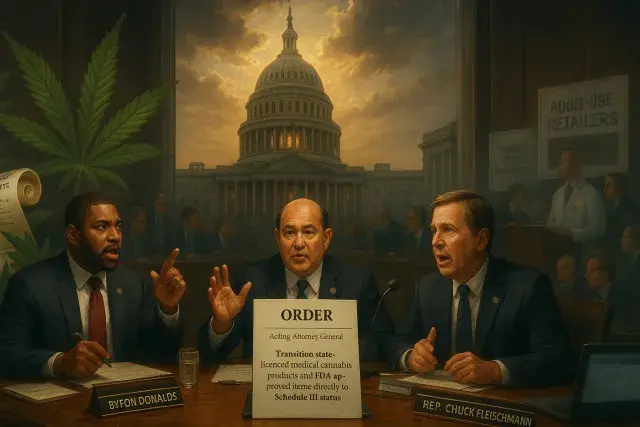
Rep. Byron Donalds (R-FL), who is seeking the Republican nomination for Florida governor, was direct when asked about the anti-rescheduling language: "I don't see how they're going to get it through." He said he would not personally support a measure to block rescheduling, even while drawing a firm line against adult-use legalization in his home state. That's a distinction worth understanding - opposition to recreational legalization doesn't automatically translate into support for keeping cannabis on Schedule I. Those are different policy arguments, and their separation is becoming more visible in Republican circles.
The Business Stakes Behind the Regulatory Procedure
The Department of Justice moved in April to place state-licensed medical cannabis products and any FDA-approved marijuana products into Schedule III immediately, under Acting Attorney General Todd Blanche's order. That action didn't wait for the administrative hearing - it took effect on announcement. What's still being adjudicated in the hearing that began this week is the broader rescheduling question, covering the full scope of cannabis commerce in regulated markets.
Here's the operational wrinkle: because Blanche's order has already taken effect for medical cannabis, it's not entirely clear how the congressional rider - if it somehow passed - would unwind what's already done. Legal analysts and compliance officers will be parsing that question carefully. For dispensary operators structured as medical-only businesses under state licensing frameworks, the immediate Schedule III designation could already be altering their federal tax exposure. For adult-use retailers, the picture remains unresolved.
The DEA, acting as the proponent of rescheduling in the administrative proceeding, filed witness disclosures last week that include a physician prepared to testify that medical cannabis provides benefit to pain patients. Opponents filed their own briefs, focusing on public health and safety concerns. The DEA judge overseeing the proceedings received a request this week - from Marijuana Moment - to allow livestreaming of the hearing. Whether that's granted matters less to operators than the substance of what gets argued.
Bipartisan Ambivalence Doesn't Mean Policy Clarity
Rep. Lou Correa (D-CA) framed the debate in terms of democratic legitimacy, noting that the vast majority of states and the American public have moved toward accepting cannabis in some form. Rep. Chuck Fleischmann (R-TN) offered something rarer in this debate - honesty about his own position's trajectory. He doesn't use cannabis, doesn't support legalization, and said plainly that he is "not on the winning side of that issue long term." That kind of candor is useful. It signals that even legislators with no personal sympathy for the industry understand which direction the political current runs.
What that doesn't produce, at least not yet, is the kind of affirmative federal legislation the industry actually needs. Rescheduling through the administrative process is meaningful - particularly for 280E relief and banking access under frameworks like the SAFER Banking Act discussions - but it doesn't resolve the fundamental legal conflict between state-licensed cannabis commerce and the Controlled Substances Act. Operators running POS systems, managing inventory through seed-to-sale tracking platforms, and structuring wholesale agreements across state lines are still doing so inside a legal structure that federal banking regulators have never formally blessed.
The anti-rescheduling rider won't pass. Most people paying attention to the process believe that. But the absence of a block isn't the same as a green light - and cannabis businesses that have been planning around potential Schedule III designation should keep scenario-planning. Federal regulatory timelines rarely move on the schedule that spreadsheets prefer.