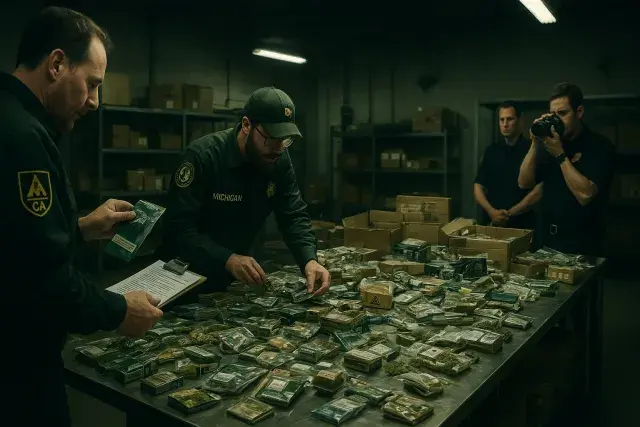
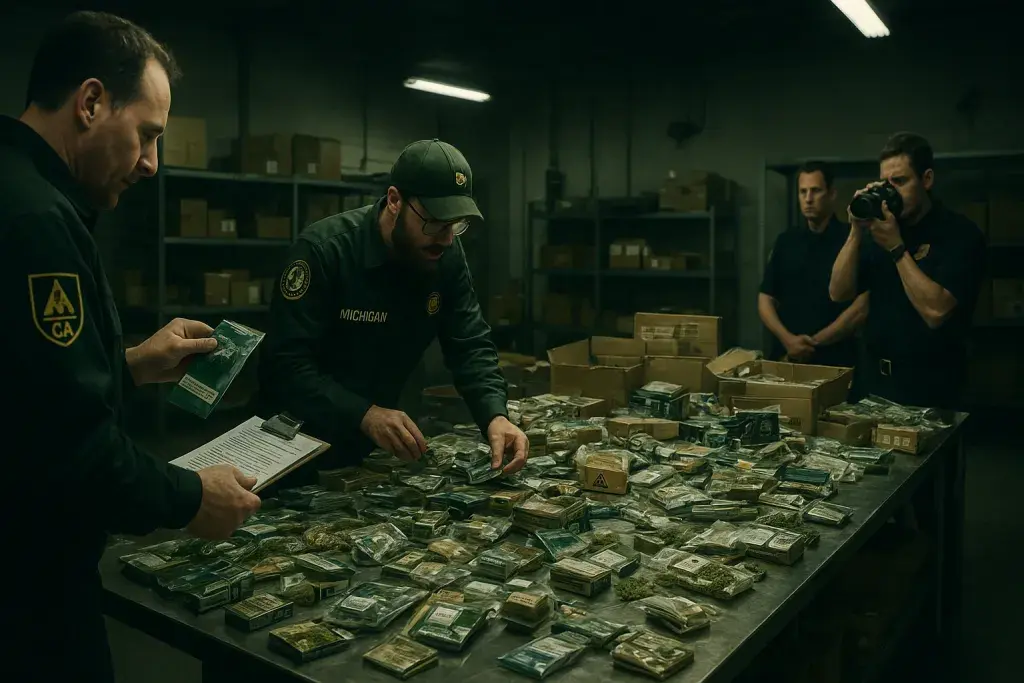
Michigan's Cannabis Regulatory Agency has filed a formal complaint against VJAS 1, a licensed cannabis processor in Harrison Township, after an inspection uncovered more than 12,000 individual products with no Metrc tags or other identifying information - including items in California-specific packaging. The facility now faces potential fines, license suspension, revocation, restriction, or refusal of renewal. It's a serious enforcement action, and the details of what investigators found tell a story that goes well beyond a paperwork lapse.
Seed-to-sale tracking exists precisely to prevent situations like this one. Every state with a regulated cannabis market requires licensees to tag products through a state-sanctioned system - in Michigan, that's Metrc - so that inventory can be traced from cultivation through processing and into retail sale. The system is the backbone of compliance for any licensed operator; it's how regulators verify that products in a facility are legal, tested, and properly sourced. Businesses using dispensary pos software nevada and similar point-of-sale or inventory platforms in other regulated states understand that Metrc integration isn't optional - it's the minimum standard for operating without regulatory exposure. When investigators at VJAS 1 cross-referenced the few products that did carry Metrc tags, they found those tags belonged to inventory that was supposed to be at entirely different cannabis businesses. That's not a clerical error. That's a chain-of-custody breakdown with serious implications.
What makes this case particularly striking is the California packaging. Products bearing "CA" labeling and California-specific consumer warnings have no legitimate place in a Michigan-licensed processing facility. California and Michigan both operate regulated adult-use markets, but they are separate regulatory ecosystems - product licensed, tested, and packaged for California cannot be legally sold in Michigan. State-legal cannabis cannot cross state lines; federal law prohibits it regardless of the legal status at either end of the transaction. So the presence of California-packaged products inside a Michigan processing facility raises a direct question about sourcing that the CRA is now formally pressing VJAS 1 to answer. Employees at the facility, according to the CRA, could not explain the origin or presence of the untagged inventory. That's a significant problem in any enforcement proceeding.
What the Compliance Failure Actually Looks Like in Practice
For anyone operating or investing in a licensed cannabis business, the mechanics here are worth understanding. Metrc tagging is not a back-office technicality - it's an active, ongoing operational requirement. Every unit of product a processor handles should carry a unique Metrc tag that ties it to a specific batch, a specific licensee, and a specific point in the supply chain. More than 12,000 untagged items isn't a gap in a log; it's a facility operating largely outside the tracking system that defines legal cannabis commerce in Michigan.
There's also the matter of the misattributed tags. Finding products with valid Metrc identifiers that actually belong to other businesses suggests either that tags were physically transferred from products at other facilities - which would be deliberate - or that there's a deeper inventory management failure involving multiple licensees. Either scenario is exactly what regulators build enforcement authority to address. The CRA's action here is consistent with how cannabis regulators in mature markets treat traceability violations: not as administrative footnotes, but as potential indicators of diversion, which is the movement of cannabis products outside the legal, regulated supply chain.
The Regulatory and Business Risk for Licensed Operators
The range of penalties VJAS 1 faces - fines, suspension, revocation, restriction, refusal to renew - reflects how Michigan structures its enforcement ladder. Regulators rarely treat inventory violations as isolated incidents; they tend to treat them as evidence of systemic compliance failures. An operator facing this combination of charges is in a precarious position. A suspension alone can disrupt supply relationships, force product holds, and create cash-flow pressure that's hard to recover from in a competitive wholesale market. Revocation, obviously, ends the business entirely.
For other licensed processors and retailers in Michigan, the case is a reminder of what routine inspections can turn up - and how quickly an operational shortcut or inventory management failure can become a formal enforcement action on public record. The CRA, like most state cannabis regulators, publishes complaint and disciplinary information. Compliance history is visible to potential investors, banking partners, and other licensees who might otherwise consider a wholesale or distribution relationship. Reputational exposure follows legal exposure in this industry, often at the same pace.
Broader Implications for the Supply Chain
Cannabis diversion - whether it flows into the unregulated market or across state lines - is one of the central concerns regulators cite when defending the costs of seed-to-sale tracking requirements. The entire architecture of state cannabis licensing rests on the premise that every product in the legal market can be accounted for. When a single facility holds thousands of untagged products and cannot explain them, it puts pressure on that premise in a way that regulators cannot ignore without undermining the credibility of the compliance framework itself.
The California packaging detail adds a dimension that other processors and brands should not overlook. As the multi-state cannabis market matures, the appearance of products from one state's regulated market inside a facility licensed in another state will draw enforcement attention - fast. The existence of California-compliant warning labels and state-specific branding on products found in a Michigan processor is the kind of evidentiary detail that doesn't resolve itself with a compliance memo. It requires a full account of the supply chain, and if that account isn't forthcoming, enforcement consequences tend to follow accordingly.