WM Technology, Inc. has spent years trying to convert its Weedmaps brand from a consumer directory into something closer to infrastructure for state-legal cannabis retail. The company runs a two-sided marketplace - shoppers browse menus and reserve products, retailers fulfill orders off-platform - while building out a SaaS suite that dispensaries and brands pay for directly. That distinction matters more than it sounds like it should.
A Marketplace That Doesn't Touch the Money
Here's the catch with the Weedmaps Marketplace: it generates leads, not transactions. No payment processing happens on the platform itself. A consumer finds a product, submits an inquiry or reservation, and the retailer handles everything downstream - order confirmation, point-of-sale entry, compliant packaging, age verification at pickup or delivery. That structure keeps WM Technology outside the thornier regulatory territory around cannabis payments, where federal banking restrictions still make cashless processing a genuine operational headache for dispensary owners. In practice, though, it also means the company's revenue depends heavily on retailers wanting visibility badly enough to pay for it.
The SaaS Suite: Where the Real Business Lives
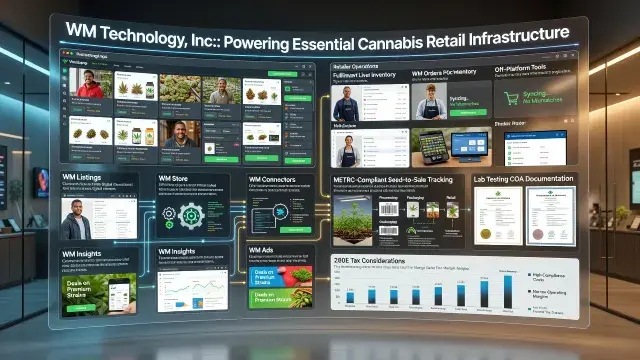
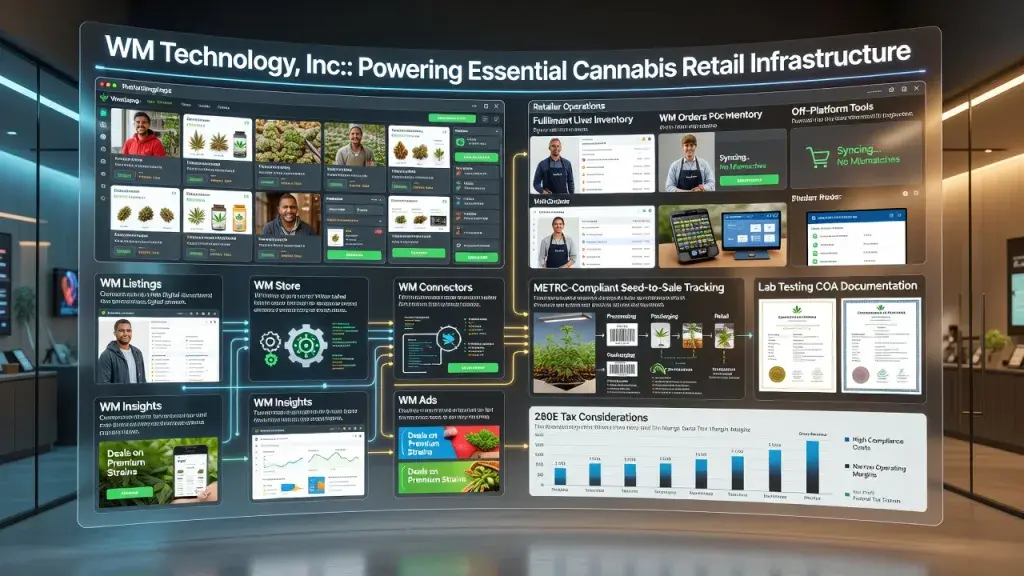
Weedmaps for Business is the quieter, more consequential part of the operation. WM Listings handles directory presence and profile management - the digital storefront equivalent of a street-facing sign. WM Orders integrates with point-of-sale systems so budroom inventory and online menus stay synced, which sounds routine until you consider how often SKU mismatches between POS terminals and public-facing menus create compliance headaches or simply lose sales. WM Store offers white-label digital menus retailers can embed on their own websites, reducing dependency on third-party traffic. WM Connectors link retailer systems to outside platforms via API, and WM Insights supplies analytics on consumer behavior and sales patterns - data that multi-state operators increasingly use to benchmark wholesale pricing and adjust store-level assortment.
On top of that sits WM Ads, the advertising and promotional layer that lets brands and retailers buy placement. This is the add-on revenue that supplements subscription fees, and it's not a small distinction for operators managing thin margins under 280E, the federal tax code section that bars standard business deductions for plant-touching companies. Every dollar spent on software or advertising is a dollar that can't be written off the way a normal retailer's marketing spend would be.
Why This Structure Matters to Operators
For licensed retailers and brands, the calculus is straightforward but not trivial: is paying for listings, analytics, and advertising worth it relative to other customer-acquisition channels? Dispensary margins are already squeezed by excise tax, compliance logging requirements tied to state seed-to-sale tracking systems like METRC, and the ongoing cost of lab testing and COA documentation for every product batch. A subscription-based discovery platform adds another fixed cost to that ledger.
What's striking here is how much this mirrors broader retail-tech trends outside cannabis - platforms monetizing visibility rather than transactions, data analytics becoming a retention tool, and software vendors positioning themselves as indispensable middleware between fragmented retailers and inconsistent state rules. For a market still defined by license caps, social equity provisions, and patchwork local zoning, a platform offering some measure of standardized tooling has obvious appeal. Whether that appeal translates into durable subscriber relationships, or whether retailers eventually view it as one more line item to cut, remains the open question for anyone watching this corner of cannabis retail technology.