The Bureau of Land Management has rewritten the terms of its wild horse and burro Sale Program, adding stronger legal language to the Bill of Sale and new internal screening tools designed to keep animals out of the hands of buyers who funnel them toward slaughter. The changes don't alter who qualifies to buy a sale-eligible horse or burro, but they do change what happens to a buyer who breaks the rules after the sale is final.
What the Sale Program Actually Does
Congress created the sale authority under the Wild Free-Roaming Horses and Burros Act, and it functions alongside - not instead of - the agency's adoption program. Animals become sale-eligible once they pass age 10 or have been passed over for adoption at least three times. From there, individuals can buy up to four animals every six months at a standardized base fee of $125 each, while sanctuaries, trainers and larger operations can pursue group purchases of five or more. The distinction that matters most, operationally, is this: adoption keeps an animal under BLM jurisdiction for roughly a year while title transfers, but a sale transfers full private ownership immediately via Bill of Sale. No title follows. No federal jurisdiction follows either, under 43 U.S.C. § 1333(e)(4) - once sold, the animal is no longer legally a "wild horse or burro" at all.
Why the Bill of Sale Got a Rewrite
That jurisdictional cutoff is precisely the gap the new policy tries to close. Once an animal is sold, the BLM has no tracking mechanism and no ongoing compliance authority - the agency said as much plainly in its own FAQ. So the leverage has to come from the paperwork signed before the sale closes. The updated Bill of Sale now requires purchasers to certify, under penalty of federal law, that they will not knowingly, recklessly, or negligently resell or transfer an animal to anyone intending to process it - or its remains - into commercial products, or to any intermediary supplying such operations. That language is aimed squarely at kill pens, the holding facilities where slaughter-bound horses are staged before export, often marketed through manufactured urgency and inflated pricing that the agency itself characterizes as exploitative.
How Enforcement Is Supposed to Work Now
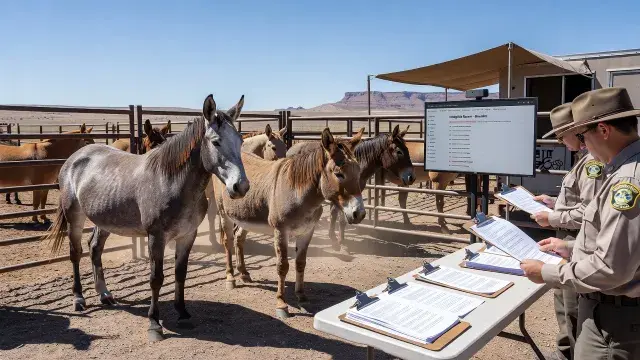
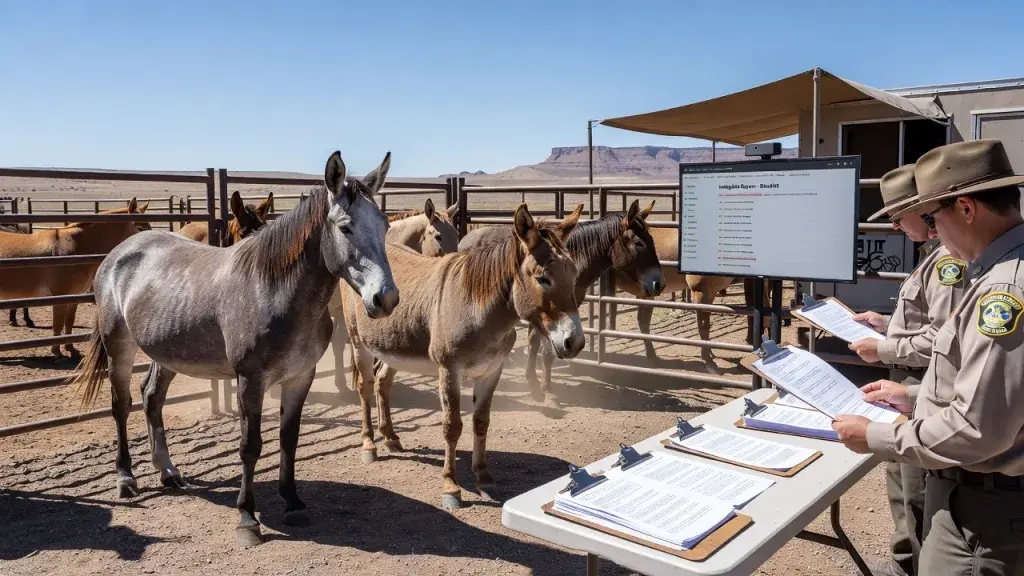
The real mechanism here isn't a new inspection regime - it's a blacklist. Field staff can now flag a buyer as "ineligible for sale" in internal systems if there's evidence they violated the resale terms, and that flag is meant to follow the person across future transactions once BLM's new ManeFrame case-management platform rolls out. Until then, staff check eligibility manually, and in locations without reliable internet, they'll work from printed ineligibility lists at adoption and sale events. Field offices also retain authority to cap how many animals one buyer can purchase at a given event, and how many sold animals can be loaded onto a single trailer - restrictions that must be set before an event begins and applied uniformly to every participant.
The Consequences for Getting It Wrong
A buyer who falsifies information or knowingly violates the resale terms faces more than a purchasing ban. Documentation can be referred to law enforcement, and false statements to a federal agency can trigger exposure under 18 U.S.C. § 1001, with prosecution decisions resting ultimately with U.S. Attorney's Offices. The agency is explicit that this is not a response to widespread abuse - most buyers, it says, provide humane, compliant homes - but rather a tightening meant to catch isolated bad actors before they can repeat the behavior. Anyone with credible information about a suspected violation can report it directly to BLM's National Information Center.
- Base sale fee standardized at $125 per animal, with exceptions requiring BLM Headquarters approval
- Buyers must certify capacity for adequate feed, water, shelter and veterinary access before purchase
- Sold animals fall outside BLM jurisdiction immediately; adopted animals remain subject to compliance checks for about 12 months
- Violations can result in purchasing bans, law enforcement referral, and potential federal false-statement charges