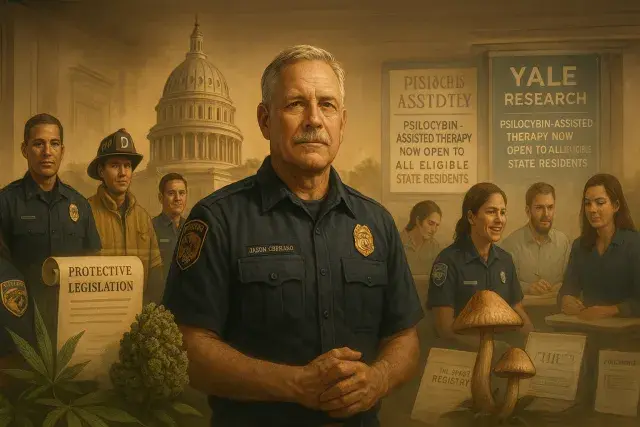
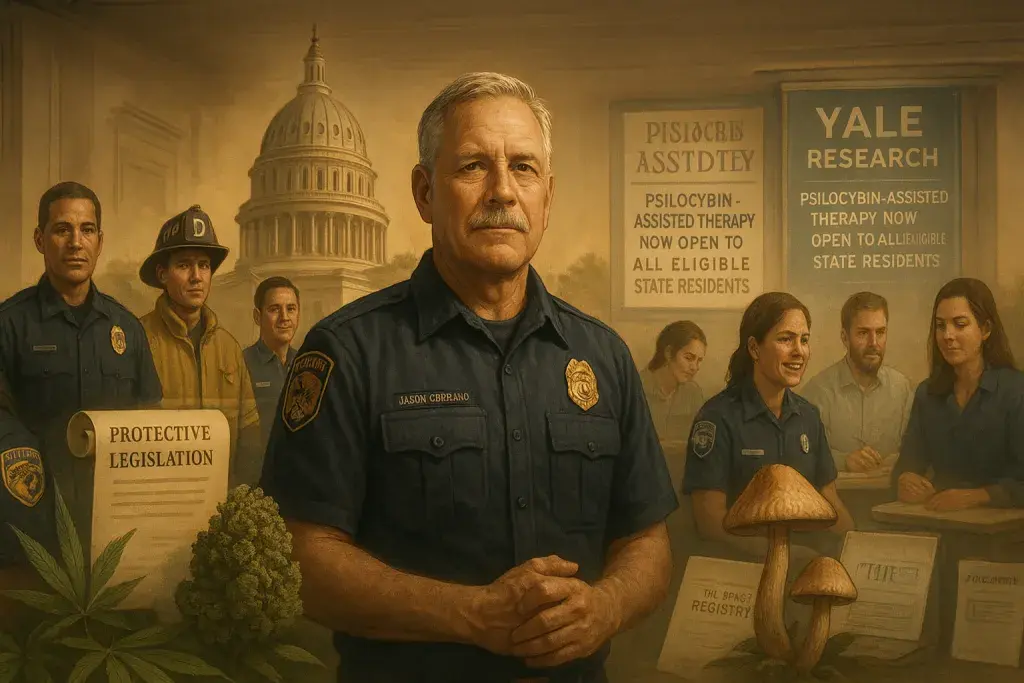
A quiet but significant policy shift is moving through state legislatures in 2025, as lawmakers approve measures that go well beyond conventional therapy and prescription medication to address post-traumatic stress in firefighters, police officers, and emergency medical workers. The approaches vary considerably - from employment protections for medical cannabis patients to supervised psychedelic therapy research - but the direction is consistent: states are broadening what counts as acceptable treatment for an occupational health crisis that has gone chronically underaddressed.
For cannabis-specific operators and compliance professionals, Maryland's new law is the most immediately relevant development. Effective in October, it shields registered medical cannabis patients who work as firefighters, EMTs, paramedics, and other rescue workers from employment discrimination tied to off-duty cannabis use - provided they are not impaired while on duty. The law applies specifically to workers who test positive for cannabis metabolites, which can remain detectable long after any psychoactive effect has passed. That distinction matters enormously. Metabolite persistence has always been the compliance fault line between lawful off-duty use and employer liability; Maryland has now drawn a clearer line, at least for this class of workers. Ohio, meanwhile, is taking a more administrative route - Gov. Mike DeWine signed legislation creating a Post-Traumatic Stress Injury Commission that will review applications from eligible first responders seeking financial assistance for treatment costs. For dispensary operators building out medical cannabis programs in Ohio, resources like IndicaOnline Ohio offer market-specific context that can help frame the compliance environment as these patient populations expand.
The Maryland law doesn't mandate that employers accommodate cannabis use - it creates a floor against discrimination, not a ceiling on workplace policy. That sounds tidy on paper, but in practice, the ambiguity around "impairment" is real and operationally complicated. Cannabis doesn't produce a reliable real-time impairment test the way a breathalyzer does for alcohol. Employers, unions, and legal counsel will spend the next several months figuring out what "not impaired while on duty" actually means in an enforcement context. For medical cannabis dispensaries serving these patient populations, it's worth understanding that patients may still face workplace friction even under this protection - and budtenders should be prepared to discuss regulatory nuance without making clinical promises.
Psychedelic Therapies Entering the Policy Mainstream
The cannabis angle is only part of this story. Several states are actively exploring psilocybin and other psychedelics as therapeutic tools for first responders - and the policy architecture being built around them echoes, in some ways, the early regulatory scaffolding that shaped medical cannabis programs a decade ago.
Connecticut expanded a Yale University pilot program studying psilocybin-assisted therapy, opening participation to any state resident 18 or older who meets the clinical eligibility criteria set by Yale's institutional review board. Previously, the program was limited to veterans, retired first responders, and frontline health care workers. Missouri lawmakers advanced a bill that would allow veterans and first responders enrolled in approved research studies to receive psilocybin and ibogaine under medical supervision for PTSD and other mental health conditions - though the legislature adjourned in May before the bill reached the governor's desk.
These are still research frameworks, not commercial markets. But the policy precedent being set is worth watching. Regulated psychedelic therapy, if it follows a trajectory similar to medical cannabis, would eventually require licensing structures, dispensing protocols, patient registries, and compliance infrastructure. The B2B vendors, software providers, and multi-state operators who got in early on cannabis compliance technology learned hard lessons about building systems under regulatory ambiguity. That institutional knowledge - seed-to-sale logic, patient verification workflows, audit-trail documentation - may have direct applications if psychedelic therapy programs scale.
What This Means for the Medical Cannabis Industry
Here's the thing: first responders represent a medically significant and politically sympathetic patient population. Their inclusion in these new state frameworks signals that lawmakers are increasingly willing to decouple cannabis-as-medicine from the social and political baggage that has slowed broader reform. That's a meaningful shift in the regulatory framing - and it has practical implications for medical dispensary operators.
Dispensaries operating in states with active medical programs should be paying attention to which occupational groups their state now protects or prioritizes in law. Employment discrimination protections for medical cannabis patients in essential public-safety roles change the real-world patient profile. Workers who previously avoided the medical registry out of fear of job consequences may now register - which affects patient volume, consultation demand, and product mix on the dispensary floor.
Jason Cerrano, a retired firefighter and paramedic with more than 20 years of experience in Missouri who now serves as director of commercial research and development at IDEX Fire & Safety, described the accumulated psychological weight that first responders carry: over time, repeated exposure to traumatic events can normalize what should remain disturbing - a gradual erosion that makes treatment-seeking both more necessary and, historically, more stigmatized. These are the patients who stand to benefit most from the shift in policy posture. Whether cannabis, psilocybin research, or financial assistance for conventional therapy, the underlying recognition is the same: the existing toolkit hasn't been sufficient.
For the medical cannabis industry specifically, the operational takeaway is straightforward. States are actively constructing policy environments where cannabis intersects with occupational health, employment law, and public-safety institutions. Dispensaries should review their patient intake processes, staff training on sensitive consultations, and local compliance documentation - because the patient population is changing, even if the compliance framework hasn't fully caught up yet.