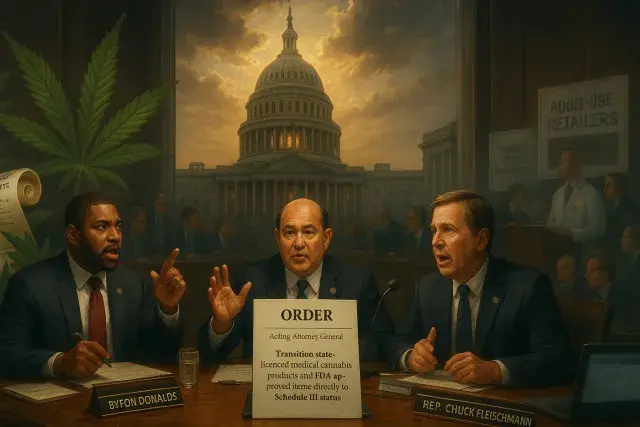

The Drug Enforcement Administration's move to shift narrow categories of cannabis into Schedule III is being described in some circles as historic reform. It isn't. Recreational cannabis in every adult-use state remains a Schedule I substance under federal law, unchanged since 1970, and the operational reality for most licensed retailers hasn't shifted nearly as much as the headlines suggest.
Here's what actually changed: FDA-approved drug products and state-licensed medical marijuana moved to Schedule III. That's the entire scope. Adult-use dispensaries, the ones building compliant packaging protocols, running seed-to-sale tracking through METRC, and managing point-of-sale systems built around cash-heavy transactions, got nothing from this order. Operators trying to modernize back-office functions, whether that means upgrading inventory management or adopting dispensary software in New Jersey to handle compliance logs and wholesale menus, still operate under the same federal shadow that's defined this industry for decades. The plumbing didn't change. Only the medical lane got a partial repaint. dispensary software in New Jersey
The financial mechanics matter here, and they matter unevenly. Section 280E, the tax code provision barring Schedule I and II operators from deducting standard business expenses, no longer applies to state-licensed medical operators. That's a real deduction benefit, and multi-state operators with legal departments built for exactly this kind of regulatory parsing will capture it first. A single-location dispensary without in-house tax counsel, meanwhile, is left figuring out how a narrow medical carve-out applies to a business model built around adult-use SKUs. The compliance costs of sorting that out land hardest on operators with the thinnest margins.
The Hearing Process Wasn't Built for Broad Reform
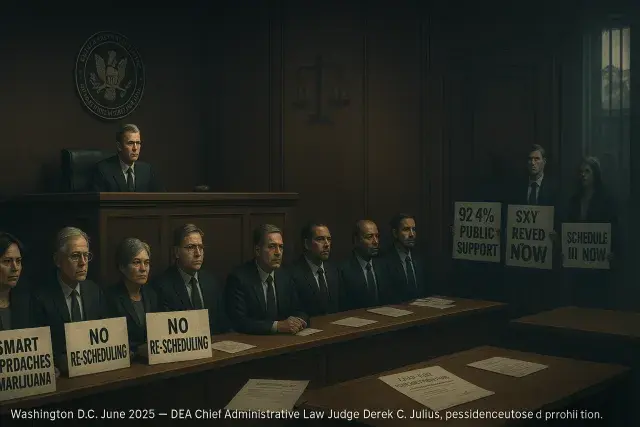
A second hearing running from late June through mid-July of this year was framed as the venue where Schedule III status might extend to marijuana more broadly, recreational use included. In practice, though, the DEA's own attorney opened proceedings by stating the hearing wasn't about legalization or recreational cannabis at all - it was confined to the question of currently accepted medical use. Under the administrator's own credentialing rules, only parties opposed to rescheduling were permitted to participate as full parties. Industry groups weren't there. Patient advocates weren't there. That's not a structure designed to produce a broad legalization outcome; it's a structure designed to generate a defensible administrative record.
The presiding judge's opinion won't bind the final decision. That authority sits with the DEA administrator, a political appointee, exactly as it has for fifty years. Whatever conclusion emerges, the state-federal conflict that forces cannabis operators into cash-heavy operations, complicates interstate commerce, and keeps banking relationships fragile isn't going anywhere.
What Stays Broken for Operators and Consumers
- Recreational cannabis remains federally illegal, leaving adult-use retailers outside the 280E relief entirely.
- Banking access and interstate commerce stay a patchwork, forcing many dispensaries to rely on cash-heavy operations rather than standard cashless payment infrastructure.
- Past convictions tied to cannabis activity remain on the books; rescheduling includes no expungement mechanism.
- Smaller operators, lacking the legal and compliance staff of larger multi-state operators, see little practical benefit from the medical-only tax relief.
A separate regulatory shift, tightening the legal definition of cannabis in November 2026 to fold hemp-derived products back under the marijuana umbrella, will hit small hemp businesses that had no connection to the rescheduling debate at all. That's the pattern worth watching: incremental rule changes that reallocate compliance burden without resolving the underlying conflict between state licensing regimes and federal law.
What Genuine Reform Would Require
Federal descheduling, removing cannabis from the Controlled Substances Act entirely, would close the state-federal gap, open standard banking relationships, and give operators a path to expunge records tied to conduct that's now legal in dozens of states. Rescheduling doesn't do any of that. It reallocates deductible expenses toward operators positioned to absorb compliance costs, while leaving license caps, social equity gaps, and lab-testing patchworks exactly where they were. For dispensary owners weighing their next capital investment, that distinction, between a schedule change and actual legalization, isn't academic. It determines whether the next five years look like consolidation among well-capitalized multi-state operators or a genuinely open market.