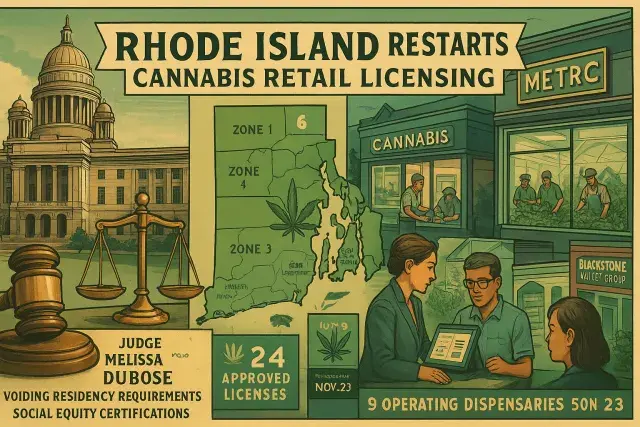
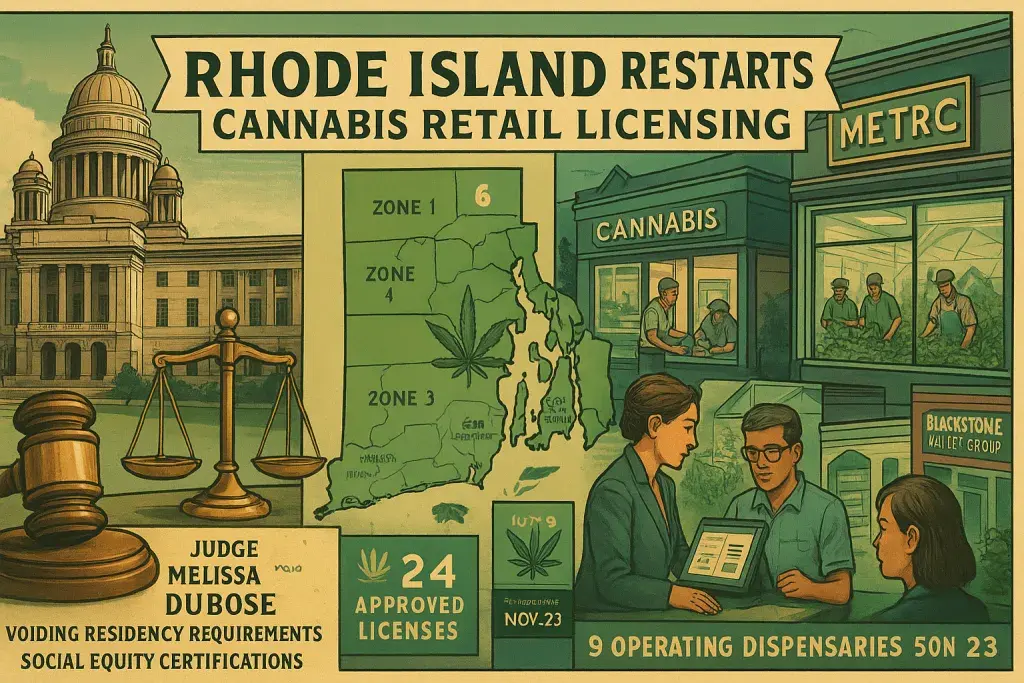
Rhode Island's cannabis retail licensing process is back online, months after a federal court ruling gutted the entire framework. Applications for retail dispensary licenses reopened this fall, with social equity certifications due Sept. 11 and general applications closing Nov. 23. The restart follows a rough spring: every pending application and social equity certification was voided after courts found the state's residency requirement - that at least one applicant live in Rhode Island - unconstitutional, echoing rulings against similar provisions in other states.
The mechanics of this reboot matter more than the headline suggests. The General Assembly didn't just strip out the residency clause; it also trimmed several implicit residency conditions buried in the social equity application itself, and gave the Cannabis Control Commission 60 days to stand up a new certification process alongside a fresh application window. For operators already running point-of-sale systems, tracking inventory through METRC, and managing compliance logs across multiple locations, this kind of regulatory whiplash is more than an inconvenience - it's a direct hit to planning cycles, lease negotiations, and staffing decisions. Multi-state operators evaluating Rhode Island as an expansion market will want to watch how the Commission handles the lottery this time, particularly given how differently states structure their back-end retail infrastructure; operators comparing regional approaches often look at more mature markets, including how dispensary software in California has evolved to handle high-volume compliance reporting, as a benchmark for what Rhode Island's smaller market may eventually need. dispensary software in California
Why the Lottery Restart Isn't Exactly a Level Field
Here's the catch with reopening applications from scratch: it isn't neutral. Groups that have spent years holding real estate and paying rent on properties they secured specifically to qualify - a requirement baked into the zoning and site-control criteria - are now competing against brand-new applicants who haven't carried that overhead. Existing applicants have effectively been bleeding cash on leases for space they may never get to use, betting on a lottery outcome that hasn't materialized. The new process is transparent, in that everyone can see who applied where, but transparency doesn't offset the sunk costs already absorbed by earlier entrants.
The state has approved 24 licenses spread across six zones, divided among social equity, worker cooperative, and general retail categories. The scrapped lottery would have awarded only 20, since Zone 1 (the northern region) and Zone 4 (East Greenwich, North Kingstown, Cranston, and Warwick) didn't draw enough applicants to fill their allotments. Whether the restart generates fuller participation in those under-subscribed zones remains an open question, and one regulators will need to track closely if geographic access to licensed retail is a policy goal.
Supply Chain Pressure Behind the Paperwork
The regulatory delay isn't happening in a vacuum. Rhode Island currently has nine operating dispensaries and 55 licensed cultivators, down from 58 earlier this year - a drop tied to OP Pharm, LLC merging into a vertically integrated compassion center, New Leaf Compassion Center, and Blackstone Valley Group declining to renew its license. Six of the nine dispensaries are partially or fully vertically integrated, meaning they grow a meaningful share of what they sell, which shrinks the wholesale pool available to independent cultivators. Growers describe themselves as barely hanging on while they wait for new retail licenses to create more buyers for their product - a real supply-chain bottleneck, not an abstract policy debate.
Before the court case derailed everything, the Commission had floated slowing the licensing timeline further, citing concern that adding dispensaries too quickly could trigger price compression among the nine incumbents. That tension - protecting existing operators' margins versus giving cultivators more retail outlets and consumers more competitive options - sits underneath every procedural delay. Federal Judge Melissa DuBose was blunt about where responsibility for the fallout lies, noting the Commission pressed ahead with licensing despite residency-requirement challenges already failing in other jurisdictions. The Commission was chaired at the time by Kim Ahern, now a candidate for attorney general, alongside members Layi Oduyingbo and Robert Jacquard.
What Operators Should Watch Next
- Confirm social equity certification eligibility well before the Sept. 11 deadline, since criteria shifted after the legislative fix.
- Track zoning and real estate requirements closely; site control remains a lottery prerequisite even under the revised rules.
- Monitor Zone 1 and Zone 4 participation levels, given their history of under-subscription.
- Expect continued debate over pacing - regulators balancing new retail supply against price stability for existing dispensaries.
None of this resolves the underlying strain on cultivators or the sunk costs already carried by long-waiting applicants. But the reopened window at least gives the market a defined runway, with concrete dates, after a spring that offered none.