New York's legal cannabis market is on pace to reach $3 billion in annual sales this year, with more than 600 licensed dispensaries now operating statewide, according to budpedia.com. The industry is projected to add roughly 16,160 new jobs in 2026, per the 2026 U.S. Cannabis Jobs Report - and SUNY Oswego is positioning itself to supply some of the talent that growth will demand.
Filling a Workforce Gap Nobody Planned For
When New York legalized adult-use cannabis in 2021, the rollout through the state's Office of Cannabis Management was, to put it plainly, rocky. Licensing delays, litigation, and a slow march toward storefront openings left a gap between policy intent and operational reality. What didn't get built out fast enough, in many cases, was a workforce that actually understood the business - not just the plant. SUNY Oswego's cannabis studies program, which started as a single elective and grew into a microcredential last year and a minor this fall, is a direct response to that gap.
Marthinus "Martin" Koen, associate professor of criminal justice and cannabis studies at the college, says the goal isn't to teach students how to grow a better product. It's to teach them how to run a compliant, sustainable operation in a sector where the rules shift constantly and the margin for error is thin.
What the Curriculum Actually Covers
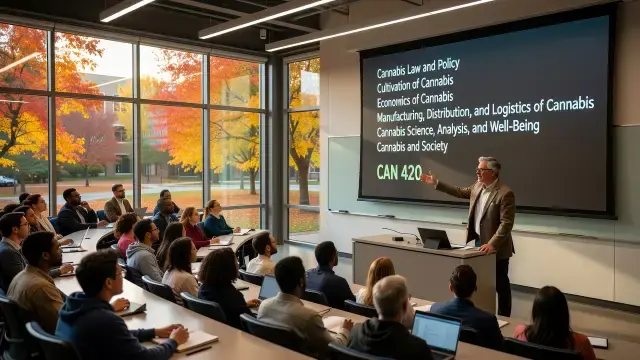
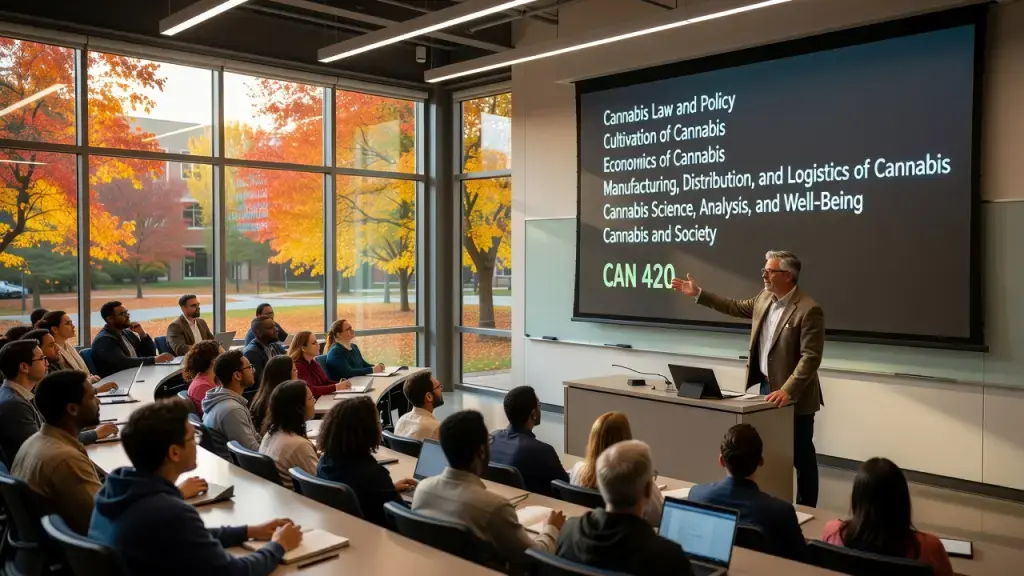
The microcredential pairs cannabis law and policy with cultivation coursework, then lets students pick electives from either the economics of cannabis or manufacturing, distribution, and logistics of cannabis - essentially supply chain management for a Schedule I plant operating under a patchwork of state rules. A second elective choice covers either cannabis science, analysis, and well-being, or cannabis and society, giving students exposure to lab testing concepts and the cultural context operators need to understand their customer base.
- Cannabis law and policy (required core course)
- Cultivation of cannabis (required core course)
- Economics of cannabis OR manufacturing, distribution, and logistics (elective)
- Cannabis science, analysis, and well-being OR cannabis and society (elective)
That mix matters. A dispensary manager who understands only retail operations - point-of-sale systems, budroom inventory, compliant packaging - but not the regulatory architecture behind seed-to-sale tracking is going to struggle the first time an audit or a METRC discrepancy lands on their desk. Koen's framing is that market understanding has to be "vast and nuanced" to compete, not just operationally capable.
Why the Classes Fill Up Fast
Non-matriculated students can enroll in individual courses without pursuing a degree, which opens the door to career-changers eyeing dispensary ownership, cultivation work, or compliance roles. Koen says demand has been strong - unsurprising, given how many people see cannabis as a new industry with real earning potential. Matriculated students, meanwhile, often treat it as a credential to stack onto an existing major, whether that's business, criminal justice, or biology.
Koen's team is also developing an independent study track aimed specifically at students who want to apply for a state license - a process that in New York involves navigating social equity provisions, local zoning approval, and a lengthy state review, none of which is intuitive to a first-time applicant.
Science Catching Up to Perception
Koen points to something worth sitting with: the hard science on cannabis has advanced substantially over the past decade, but public understanding hasn't caught up. That lag has real business consequences. Operators who rely on outdated assumptions about the product - rather than current lab testing standards, potency data, and compliance requirements - risk making decisions that don't hold up under regulatory scrutiny or customer expectations. A workforce trained in the current science, not the pop-culture version, is better equipped to handle everything from COA interpretation to customer-facing education that stays within advertising rules.
The course numbering carries its own small joke - CAN 420 is intentional, a nod to the term's origin among California students in 1971 and its long evolution into global cannabis shorthand. But Koen is quick to note the 400-level designation also signals serious academic weight, not a wink at the audience.
More information on the program is available at ww1.oswego.edu/academics/microcredentials/cannabis-studies.