Sweed has launched a public API that lets cannabis retailers build their own storefront front end while running Sweed's backend underneath it. The move addresses a persistent tension in dispensary technology: operators want distinct, brand-forward digital storefronts, but building one from scratch usually means owning compliance risk that most retailers aren't equipped to carry alone.
Why the Backend Matters More Than the Storefront
Here's the operational reality most dispensary owners run into eventually. A storefront is just a skin. Underneath it sits inventory sync, age verification, tax calculation by jurisdiction, payment processing, and product compliance logic tied to state track-and-trace systems. Get any of that wrong and you're not looking at a design problem - you're looking at a compliance violation, a failed audit, or a payment processor that drops you without warning. Sweed's pitch is that retailers shouldn't have to choose between brand control and regulatory safety. The API reads live inventory and customer records directly, the same data the point-of-sale system uses, rather than a delayed or synced copy. That distinction matters in a retail environment where budroom inventory changes by the hour and a stale product feed can mean selling something that's already out of stock or, worse, out of compliance with a batch recall.
Three Levels, One Underlying Risk Calculus
The rollout is structured in tiers, which is a sensible way to let operators self-select based on technical capacity rather than forcing a single integration path.
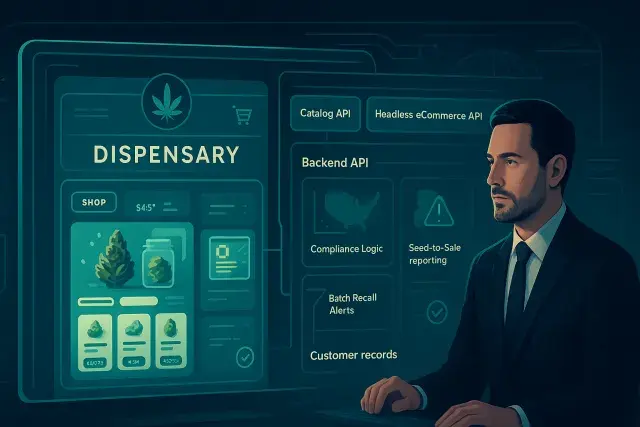
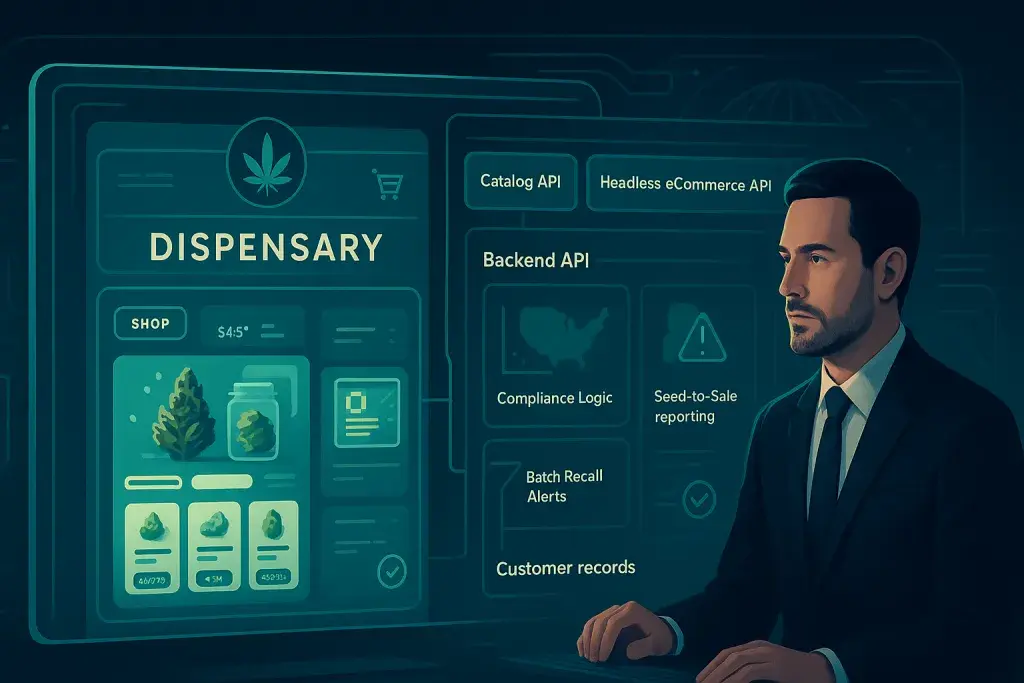
- Catalog API - product and promotion display only, minimal engineering lift
- Headless eCommerce API - full custom storefront and checkout, with accounts, cart, payments, and compliance handled by Sweed
- Full Headless UI (coming soon) - complete storefront control with access to loyalty, promo logic, and embeddable compliance components
That structure is worth paying attention to for a specific reason: it separates presentation risk from compliance risk. A retailer or agency can rebuild the entire look of a site without touching the parts of the transaction that regulators actually care about - age gating, purchase limits, tax application, payment handling. That's a meaningfully different risk profile than the alternative operators have faced for years, which is building a fully proprietary POS system to get storefront flexibility. Proprietary builds sound appealing until you're the one responsible for keeping seed-to-sale reporting accurate during a state audit.
What This Signals for Multi-State Operators and Agencies
For multi-state operators managing several storefronts across different tax and licensing regimes, a stable, single-schema API is not a small convenience. It's the difference between a marketing team spending its time on brand and local optimization versus spending it re-testing integrations every time a vendor changes its approach. Rocco Del Priore, Sweed's Co-Founder and President, framed the commitment as a long-term contract rather than a market reaction - a pointed comment given how many retail tech vendors have sunset APIs or shifted direction after building developer dependency. Whether that commitment holds is something the market will judge over time, not on launch day.
None of this changes the underlying compliance obligations retailers carry - age verification, purchase limits, accurate tax remittance, and product traceability remain the operator's legal responsibility regardless of which layer of the API they use. What it does change is who's maintaining the plumbing, and how much engineering risk a dispensary has to absorb to look and function the way it wants online.