Public Chapter 526 did something Tennessee's hemp market had not seen before: it handed regulatory authority over hemp-derived cannabinoid products to the Tennessee Alcoholic Beverage Commission, an agency built on liquor licensing, not agricultural policy. That shift, effective in 2025 with further transition milestones running into 2026, means every smoke shop, gas station cooler, and specialty retailer selling Delta-8 vapes or THCA flower now operates under a licensing regime closer to alcohol retail than to the loosely supervised hemp market Tennessee had tolerated for years. For operators, this is not a paperwork footnote. It is a structural change in who can sell, what they can sell, and how enforcement will work.
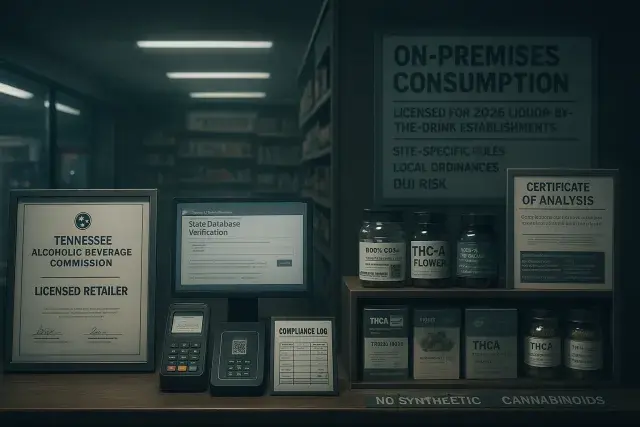
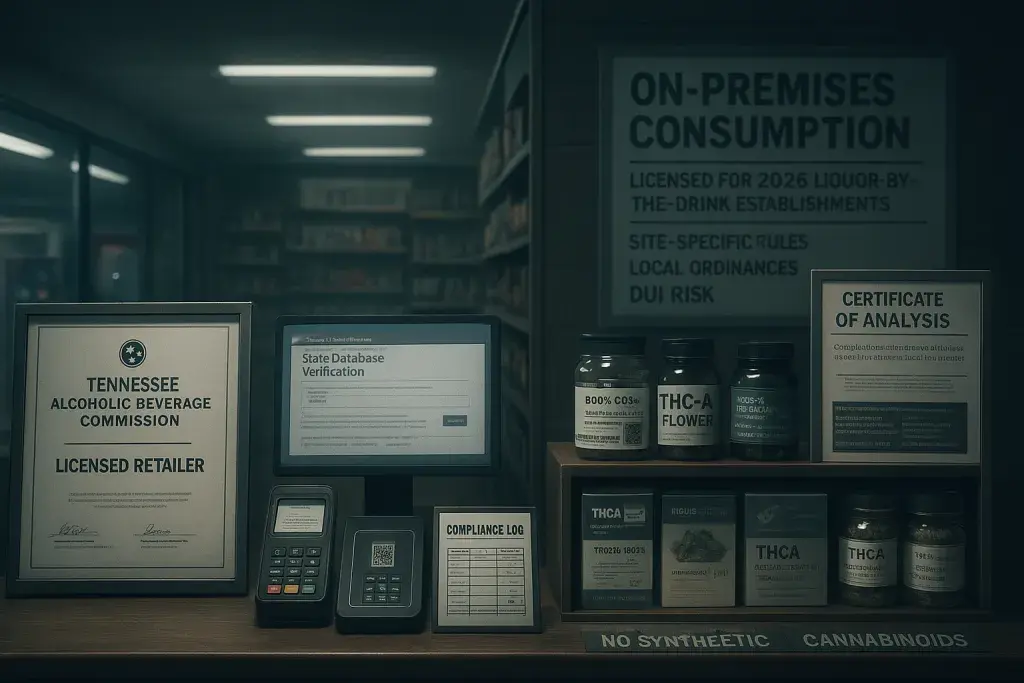
The mechanics matter here, and they are unforgiving. A local business license or a general retail permit does not establish TABC authorization, full stop. Retailers need an applicable TABC license tied to a specific legal entity and premises, verifiable in the state's database rather than displayed as a laminated certificate near the register. That distinction is going to separate compliant operators from the ones who get shut down, and it is exactly the kind of gap that seed-to-sale tracking and point-of-sale systems built for regulated cannabis markets are designed to close. Multi-state operators who already run Metrc-compliant POS for Arizona licensees understand the discipline this requires: batch-level tracking, age verification at the terminal, and compliance logs that hold up under audit. Tennessee's hemp retailers are now being asked to operate with that same rigor, even though many entered the market through general merchandise licensing with none of that infrastructure in place.
Why Total THC Math Changes the Product Mix
Tennessee did not simply adopt the federal 0.3% delta-9 THC threshold from the 2018 Farm Bill. It layered a total THC calculation on top - (THCA × 0.877) + delta-9 THC - that catches high-THCA flower most other markets treat as compliant hemp. In practice, though, this means a significant share of "hemp flower" sold as legal in neighboring states will fail Tennessee's math. For wholesalers and brands supplying Tennessee retailers, that is a real SKU management problem: product lines calibrated for looser state formulas cannot simply be shipped across the border and put on a shelf. Compliant packaging, updated certificates of analysis, and batch numbers matching current lab reports are now baseline requirements, not nice-to-haves.
The Delta-8 Question Nobody Should Treat as Settled
Here is the catch most retail guides gloss over: a lab report showing under 0.3% total THC does not, by itself, make a Delta-8 or Delta-10 product legal in Tennessee. The state prohibits synthetic cannabinoids, and most commercial Delta-8 is produced by chemically converting CBD rather than extracting it directly from hemp in meaningful natural quantities. That production method, not the THC percentage on the COA, is what determines legality. Retailers presenting these categories as unambiguously lawful are taking on liability they may not fully grasp, and buyers relying on a QR code alone are missing half the picture. The FDA has separately flagged Delta-8 products as unevaluated for safety, with unresolved concerns about manufacturing byproducts - a consumer-protection issue that compounds the legal ambiguity rather than resolving it.
What This Means for Operators and Landlords
The 2026 framework also opens a narrow lane for on-premises consumption at qualifying liquor-by-the-drink establishments - restaurants, bars, hotels with the right licensing - which is a meaningful departure from blanket prohibition. But that permission is site-specific and layered under existing smoking laws, local ordinances, and property policies. A hotel operator or commercial landlord can still say no regardless of what state law allows, and DUI exposure for cannabis impairment applies without regard to a product's legal status. For compliance teams, the lesson is straightforward: licensing status, product sourcing method, and consumption location all need separate verification. Treating any one of them as a stand-in for the others is how a retailer or a consumer ends up with real legal exposure in a market that only looks permissive from a distance.