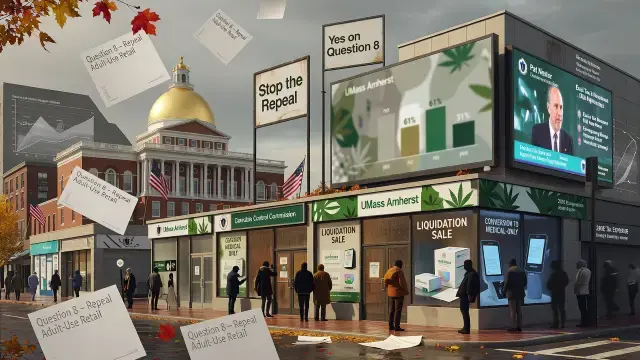
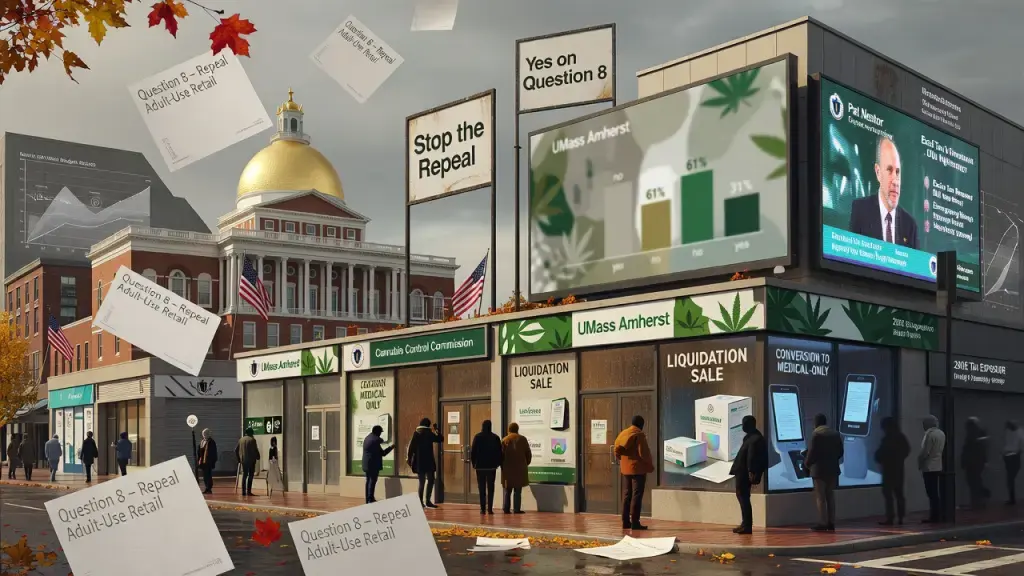
Massachusetts voters will decide next month whether to dismantle the state's entire adult-use cannabis retail system through Question 8, a measure that would shutter recreational dispensaries while preserving medical access and personal possession. A UMass Amherst poll released this week shows the repeal effort trailing badly, with 61 percent of respondents leaning "no" against 31 percent favoring elimination. But the margin matters less than the precedent - this is the first serious attempt anywhere in the country to unwind an operating adult-use market at the ballot box, and operators nationwide are watching.
What Repeal Would Actually Dismantle
Question 8 isn't a tweak to licensing rules or a potency cap. It's a full retail wind-down. Existing adult-use stores would face two options: convert to medical dispensary status through the state's licensing process, or liquidate inventory to a medical operator. The Cannabis Control Commission would survive, but its mandate would shrink to regulating medical cannabis only - no more adult-use compliance oversight, no more seed-to-sale tracking enforcement for the recreational tier, no more retail licensing pipeline for adult-use applicants, including social equity candidates who've spent years working toward storefront approval.
That's the part that should concern operators most. A license isn't just a piece of paper; it's collateral, it's the basis for lease agreements, it's tied to wholesale contracts and vendor relationships built over years. Pull the legal foundation out from under an adult-use license and everything built on top of it - payroll, real estate commitments, inventory financing - collapses with it.
The Illicit Market Argument
Opponents of repeal, including the Massachusetts Cannabis Coalition and advocacy group Project Champion, argue that eliminating regulated retail doesn't eliminate demand - it just redirects it. This is a familiar argument in regulated cannabis policy circles, and it has operational teeth. Licensed dispensaries operate under lab testing requirements, compliant packaging standards, and point-of-sale systems that log every transaction for tax and compliance purposes. Unlicensed sellers operate under none of that. No certificate of analysis, no potency verification, no child-resistant packaging mandate, no age-verification protocol at the point of sale. If regulated shelf space disappears, the question for public health isn't whether consumption stops - it's where consumers go instead, and what oversight exists once they get there.
Momentum, Messaging, and the Money Question
The "Stop the Repeal" campaign, which backs a "yes" vote on Question 8, says it's gaining ground through door-knocking and social media, and frames its position around excise tax revenue, DUI data, and emergency room utilization tied to high-potency products. Campaign spokesman Pat Nestor has argued that state and municipal revenue currently generated by the adult-use industry "can and will be replaced" if the measure passes - a claim that deserves scrutiny from anyone who understands how dependent local budgets have become on cannabis excise and sales tax lines since adult-use retail launched. Replacing that revenue stream isn't a policy footnote; it's a budgeting problem for every municipality that's built it into multi-year planning.
For operators, the lesson extends well past Massachusetts. Ballot-measure risk is now a live variable in market planning, alongside license caps, 280E tax exposure, and banking access. States with mature adult-use markets should expect similar repeal or rollback efforts to surface wherever public anxiety about potency, youth access, or visible retail saturation builds faster than regulators and industry groups can respond to it. The Massachusetts vote won't settle that tension nationally. It will just show which argument lands first with voters.